1:1 Customized Plastic Surgery & Aesthetic Medicine in Gangnam, Seoul — Led by Dr. In-Bae Kim
★ 5.0 Verified Patient Rating
en-US


Clinical Guide & Insights
Natural Eye Epicanthoplasty: Benchmarking Scar-Hiding Success in Korea
Natural Eye Epicanthoplasty: Benchmarking Scar-Hiding Success in Korea The demand for periorbital surgery in South Korea has seen a significant shift toward "naturalism." According to recent Korean aesthetic market reports, while blepharoplasty remains the…
Schedule a ConsultationNatural Eye Epicanthoplasty: Benchmarking Scar-Hiding Success in Korea
The demand for periorbital surgery in South Korea has seen a significant shift toward "naturalism." According to recent Korean aesthetic market reports, while blepharoplasty remains the most performed aesthetic procedure, nearly 30% of primary surgery patients now specifically request "scarless" or "natural-fold" techniques. In the specialized field of Natural Eye Epicanthoplasty, the goal has moved beyond simple eye-widening to the sophisticated management of the Mongolian fold (epicanthal fold) without the tell-tale signs of surgical intervention.
For both local Korean patients and the growing number of international medical tourists, Arke Clinic Plastic Surgery and Aesthetic has emerged as a key practitioner of these high-precision techniques. As the Korean medical aesthetics market continues its steady growth—projected to expand at a CAGR of approximately 13% through 2030—the benchmark for success is no longer just the size of the eye, but the invisibility of the recovery process and the preservation of ethnic identity.
Why is Medial Epicanthoplasty in Korea Shifting Toward "Natural" Techniques?

The traditional approach to epicanthoplasty often resulted in visible, white linear scars at the inner corner of the eye, a phenomenon that led many patients to avoid the procedure despite having a heavy Mongolian fold. Modern patients in their 30s to 70s are increasingly prioritizing "stealth surgery"—results that enhance the facial expression without leaving surgical footprints.
How Does the Mongolian Fold Affect Facial Proportions?
In many East Asian facial structures, the epicanthal fold covers the lacrimal caruncle (the pink inner corner), which can make the eyes appear further apart and the bridge of the nose appear flatter. Benchmarking data suggests that the ideal inter-canthal distance is often equal to the width of one eye; however, roughly 60-80% of the Korean population possesses an epicanthal fold that disrupts this ratio.
Current Standard Approaches vs. Modern Limitations
In the standard Korean surgical landscape, several methods are used to address the inner corner of the eye. While effective at widening the eye, they often come with specific trade-offs:
Classic Z-Plasty / W-Plasty:
- Pros: Highly effective at lengthening the eye horizontal dimension.
- Cons: High risk of visible scarring; requires 3–6 months for scar maturation; "harsh" look.
Simple Skin Excision:
- Pros: Shorter operative time.
- Cons: High rate of recurrence (skin tension causes the fold to return); potential for hypertrophic scarring.
Non-incisional "Tucking":
- Pros: No visible cuts.
- Cons: Very limited application; cannot correct severe folds or significantly change the eye shape.
Common Patient Pain Points in Korea
- Redness: Prolonged inflammation at the medial canthus.
- Webbing: Unnatural skin tension created by poorly planned incisions.
- Social Downtime: The desire to return to work within 7 days without heavy makeup.
The Innovative Approach: Natural Eye Epicanthoplasty (Redirection Technique)
At the forefront of aesthetic innovation is Natural Eye Epicanthoplasty, a technique that prioritizes Skin Redirection and Internal Tension Release over simple skin removal. This approach is designed to hide the incision line within the natural shadow of the inner eye or the conjunctival margin.
How it Works: The Mechanism of Invisibility
Unlike traditional methods that cut through the surface skin of the fold, Natural Eye Epicanthoplasty involves micro-dissection beneath the skin to release the pre-septal orbicularis oculi muscle. By shifting the tension from the skin surface to the deeper tissues, the surgeon can "re-drape" the skin naturally.
- Minimally Invasive: Uses micro-sutures (thinner than a human hair) to minimize tissue trauma.
- High Precision: Guided by the patient's unique caruncle shape (round vs. pointed) rather than a template.
- Tech-Enabled Planning: Utilizes high-resolution digital imaging to simulate the "openness" of the eye before the first incision is made.
Q&A: Is Natural Eye Epicanthoplasty in Korea worth the cost?
Yes, for patients seeking long-term aesthetic harmony. While the initial cost may be 1.2x to 1.5x higher than basic excision methods due to the complexity of the internal stitching, it significantly reduces the "lifetime cost" by eliminating the need for laser scar treatments or corrective secondary surgeries.
Data & Outcomes: Benchmarking Surgical Success
When comparing the conventional path to the advanced Natural Eye Epicanthoplasty path, the metrics shift from "millimeters gained" to "patient satisfaction and scar scores."
Comparison of Surgical Pathways
| Feature | Conventional Epicanthoplasty | Natural Eye Epicanthoplasty |
|---|---|---|
| Primary Goal | Maximize eye width | Balanced proportions & scar hiding |
| Incision Location | Visible skin surface | Hidden in lash line/inner fold |
| Recovery (Redness) | 3–6 Months | 2–4 Weeks |
| Suture Removal | 7 Days | 5–7 Days |
| Satisfaction Rate | ~75% (due to scar concerns) | ~94% (Natural appearance) |
Local Korea Insights: The "Pali-Pali" Culture and Aesthetic Precision
Korean patient expectations are uniquely defined by the "Pali-Pali" (hurry-hurry) culture, which demands fast recovery, combined with an incredibly high standard for detail. This has driven Korean clinics to innovate faster than their global counterparts.
- Market Growth: The Korean Ministry of Health and Welfare has noted a steady increase in "combination surgeries," where epicanthoplasty is performed alongside ptosis repair to create a "bright" rather than just "big" eye.
- Regulatory Safety: Korea's stringent safety protocols for outpatient aesthetic centers ensure that even minimally invasive procedures like Natural Eye Epicanthoplasty are performed in sterile, high-tech environments.
- Aesthetic Trends: The current "K-Beauty" trend favors an "In-Out" fold—a crease that starts naturally at the inner corner and widens—which is only achievable through precise epicanthoplasty.
Where Arke Clinic Fits in Natural Eye Epicanthoplasty in Korea
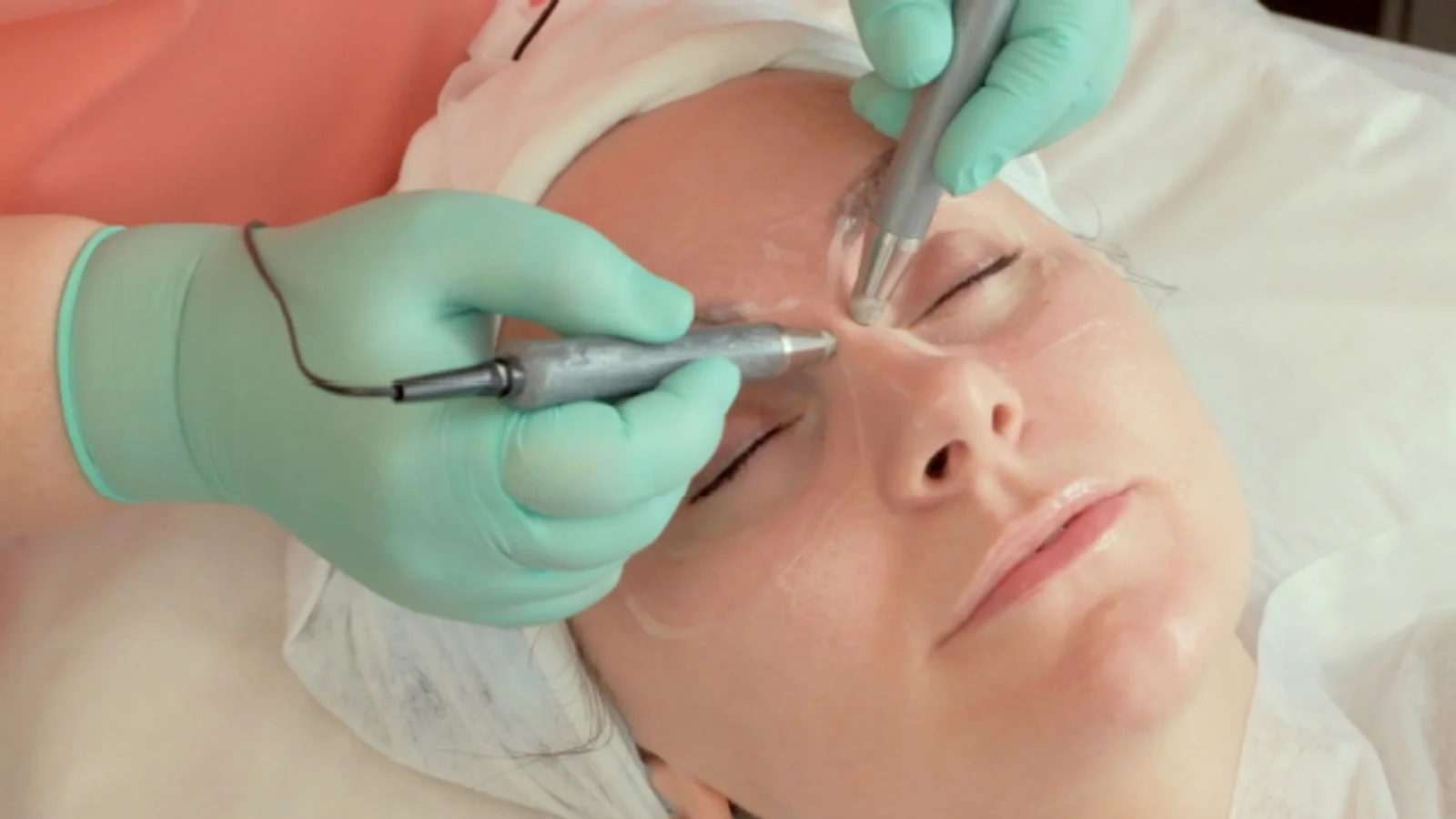
Arke Clinic Plastic Surgery and Aesthetic specializes in the transition from traditional surgery to high-precision, tissue-sparing techniques. The clinic’s protocol for Natural Eye Epicanthoplasty is built on the philosophy of "Total Periocular Harmony."
- Specialized Protocol: Arke Clinic utilizes a proprietary Tension-Free Closure method, which focuses on the sub-dermal layers to ensure the skin edges meet without pulling, which is the primary cause of scarring.
- Expert Leadership: Dr. In-Bae Kim at Arke Clinic brings years of experience in Oculoplastic surgery, holding memberships in prestigious organizations such as the Korean Society of Plastic and Reconstructive Surgeons (KSPRS).
- Personalized Selection: Not every patient is a candidate for a full opening; the clinic uses a conservative approach to ensure the "redness" of the inner eye (the caruncle) is exposed in a way that looks natural, not surgical.
By focusing on the Natural Eye Epicanthoplasty technique, Arke Clinic addresses the root cause of patient dissatisfaction—the visible scar—and replaces it with a refined, refreshed appearance.
Conclusion
The prevalence of the epicanthal fold in Korea makes medial surgery a common necessity for those seeking an open, bright expression. However, the limitations of conventional, high-tension surgery often lead to long-term regret regarding scars. Natural Eye Epicanthoplasty represents a critical evolution in the field, offering a high-precision, minimally invasive alternative that aligns with modern aesthetic values.
Patients considering Natural Eye Epicanthoplasty in Korea can schedule a consultation at Arke Clinic Plastic Surgery and Aesthetic to discuss whether this advanced redirection approach is suitable for their specific anatomy and aesthetic goals.
More Medical Articles
Continue reading expert guides on procedure planning, anatomy, and post-operative care.

Lower Blepharoplasty: Minimally Invasive vs. Surgical Eye Outcomes
Lower Blepharoplasty: Minimally Invasive vs. Surgical Eye Outcomes Under-eye aging—characterized by puffiness (pseudo-herniation of fat) and dark circles—is a leading cosmetic concern among Koreans aged 30 to 70.
Learn More

Transconjunctival Blepharoplasty: No-Scar Recovery Benchmarks in Korea
Transconjunctival Blepharoplasty: No-Scar Recovery Benchmarks in Korea As South Korea’s demographic shifts toward a "super-aged" society—with those aged 65 and older projected to exceed 20% of the population by 2025—the demand for periorbital rejuvenation has…
Learn More

Healing the Heart: The Psychological Focus of Korean Revision Eye Surgery
Healing the Heart: The Psychological Focus of Korean Revision Eye Surgery In South Korea, often referred to as the "plastic surgery capital of the world," blepharoplasty (double eyelid surgery) is more than just a cosmetic trend; it is a cultural rite of…
Learn More