1:1 Customized Plastic Surgery & Aesthetic Medicine in Gangnam, Seoul — Led by Dr. In-Bae Kim
★ 5.0 Verified Patient Rating
en-US


Clinical Guide & Insights
Lower Blepharoplasty: Minimally Invasive vs. Surgical Eye Outcomes
Lower Blepharoplasty: Minimally Invasive vs. Surgical Eye Outcomes Under-eye aging—characterized by puffiness (pseudo-herniation of fat) and dark circles—is a leading cosmetic concern among Koreans aged 30 to 70.
Schedule a ConsultationLower Blepharoplasty: Minimally Invasive vs. Surgical Eye Outcomes
Under-eye aging—characterized by puffiness (pseudo-herniation of fat) and dark circles—is a leading cosmetic concern among Koreans aged 30 to 70. According to a 2024 aesthetic market report, South Korea remains the global leader in per-capita cosmetic procedures, with eyelid surgery consistently ranking as the most performed surgical intervention.
The demand for lower eyelid rejuvenation is driven by a domestic "youthful aesthetic" (often referred to as Aegyo-sal or a smooth lid-cheek junction). Market data projects the Korean aesthetic surgery sector to grow at a CAGR of 15% through 2030, reaching an estimated USD 3.9 billion. This growth is increasingly fueled by patients seeking "natural" results with minimal downtime, moving away from the "over-hollowed" look that characterized older surgical techniques.
Eyelid Rejuvenation in Korea: Costs, Benefits, and Ideal Candidates
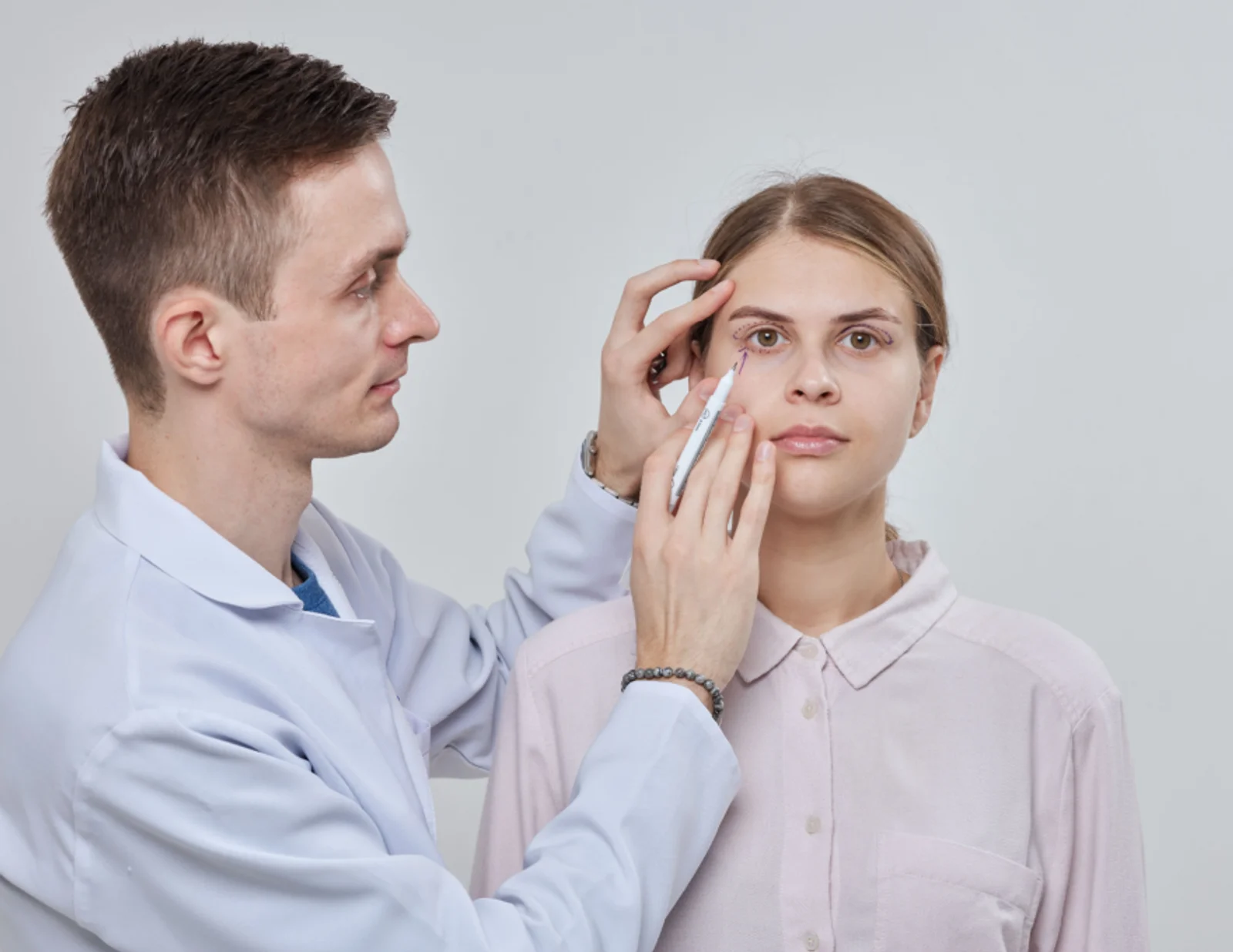
What is the Standard Lower Blepharoplasty Approach?
Traditionally, lower blepharoplasty in Korea involved a subciliary (transcutaneous) incision made just below the lash line. While effective for removing large amounts of excess skin, this "classic" method is increasingly reserved for older patients with significant skin laxity.
Utilization Benchmarks in Korea:
- Average Cost: $1,800 – $4,000 USD (2,500,000 – 5,500,000 KRW) depending on complexity.
- Downtime: 10–14 days for visible swelling and bruising to subside.
- Re-intervention Rate: Low, but patients often report "hollowing" 5–10 years later if too much fat was removed.
Why Do Standard Techniques Sometimes Fail?
The primary "pain point" for Korean patients is the risk of ectropion (the lower lid pulling downward) or an unnatural, sunken appearance. Research indicates that simple fat removal can lead to "iatrogenic aging," where the eye looks flatter and more skeletal over time.
The Innovative Solution: Fat Repositioning & Autologous Fat Grafting
At Arke Clinic Plastic Surgery and Aesthetic, the focus has shifted from "subtraction" to "redistribution." The current gold standard for a natural, high-precision result is Fat Repositioning (often combined with Autologous Fat Grafting).
How it Works: The Mechanism of Precision
Instead of discarding the fat pads that cause "bags," surgeons use a transconjunctival approach (an incision made inside the eyelid).
- Release: The orbital septum is released, allowing the bulging fat to be mobilized.
- Repositioning: The fat is moved downward into the "tear trough" (the hollow groove under the eye).
- Volume Balancing: If additional volume is needed for the mid-face, Autologous Fat Grafting is performed using micro-fat or nano-fat harvested from the patient's own body to create a seamless transition.
Why it is Considered High-Precision Care
- No Visible Scars: Because the incision is inside the lid, there is zero external scarring.
- Function-First: It preserves the strength of the orbicularis oculi muscle, maintaining the natural eye shape.
- Regenerative Aspect: Autologous fat contains stem cells and growth factors that improve skin texture and thickness over time.
Is Fat Repositioning in Korea worth the cost?
Yes. While the upfront cost may be 20-30% higher than simple fat removal, it typically prevents the need for future fillers or revision surgeries to fix hollowing. It addresses the root cause of the "tired look" by smoothing the entire lid-cheek complex.
Data & Outcomes: Benchmarking the Results
Recent clinical reviews in Korean oculoplastic journals suggest high patient satisfaction with tissue-preserving methods.
| Feature | Conventional Fat Removal | Fat Repositioning & Grafting |
|---|---|---|
| Incision Site | External (below lashes) | Internal (transconjunctival) |
| Primary Goal | Debulking (flattens bags) | Smoothing (fills hollows) |
| Recovery Time | 7–14 days | 5–7 days |
| Risk of Hollowing | High (over time) | Very Low |
| Satisfaction Rate | Approx. 82% | Over 95% (reported in Korean clinical surveys) |
Local Korea Insights: The Shift to Tech-Driven Care
Korean patients prioritize "Naturalism" (Ja-yeon-seu-reom). This cultural preference has pushed Seoul's clinics to adopt advanced technologies, such as:
- High-Resolution Ultrasound: Used pre-operatively to map fat distribution and vascularity.
- Hyperbaric Oxygen Therapy (HBOT): Frequently included in post-op protocols in Gangnam clinics to reduce swelling by up to 30%.
- AI-Driven Simulation: Helping patients visualize the balance between their eyes and mid-face before the first incision.
Where Arke Clinic Fits in Eye Surgery in Korea
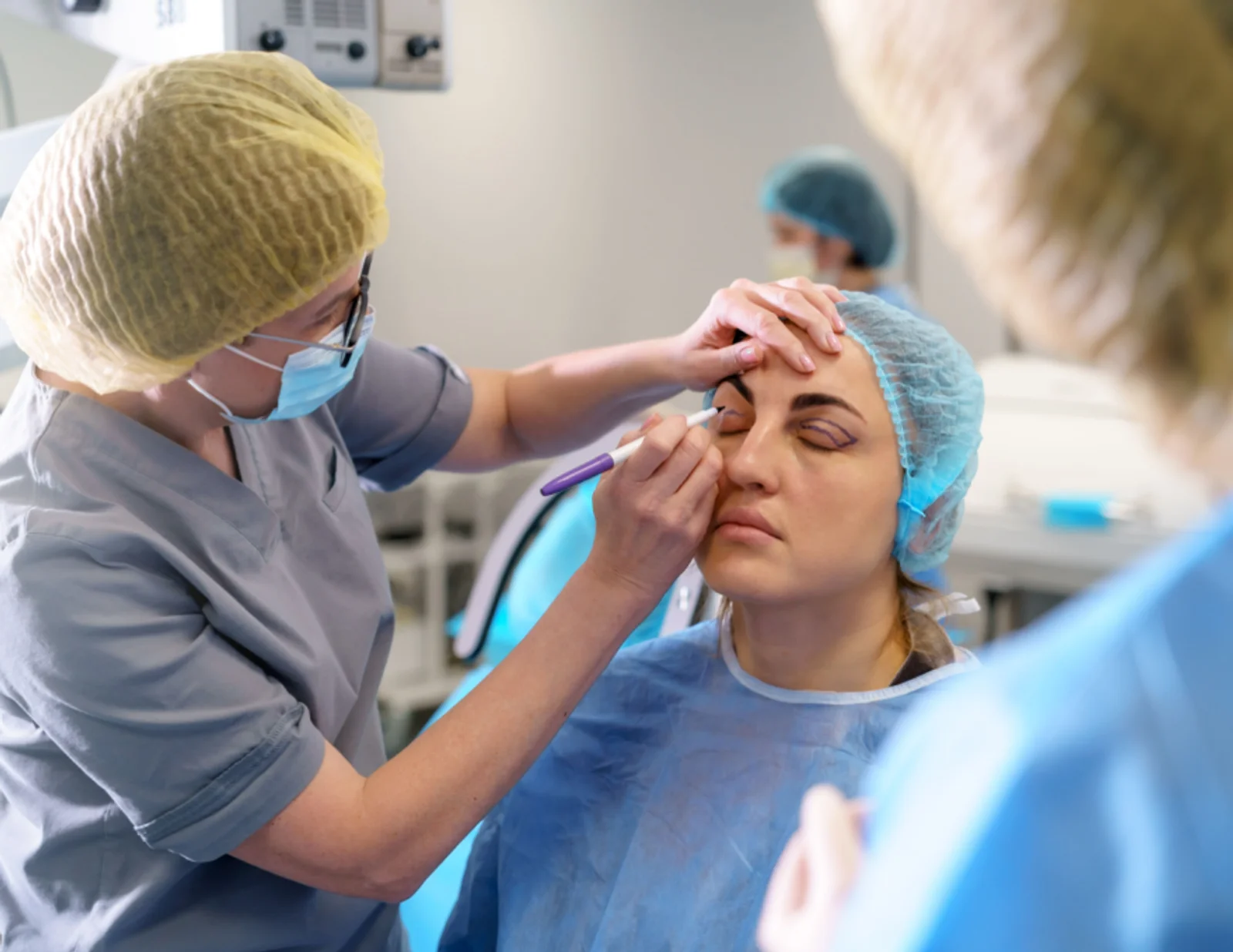
Arke Clinic Plastic Surgery and Aesthetic specializes in high-precision, patient-centric eye surgery. Established in 2008, the clinic has nearly two decades of experience navigating the complexities of facial harmony.
Our approach to Fat Repositioning and Autologous Fat Grafting is rooted in a "Safety-First" philosophy. Rather than following commercialized trends, our surgeons prioritize:
- Multidisciplinary Evaluation: Assessing both the aesthetic concern and the functional health of the eye.
- Bespoke Protocols: Tailoring the fat distribution to the patient’s unique bone structure.
- Long-Term Support: Comprehensive follow-up programs to monitor healing and ensure lasting results.
Led by board-certified specialists with memberships in the Korean Society of Plastic and Reconstructive Surgeons, Arke Clinic is considered a trusted destination for both local and international patients seeking advanced eye rejuvenation.
Conclusion
With roughly 1 in 5 Koreans considering or undergoing aesthetic enhancements, the choice of technique is more critical than ever. Conventional "cutting" methods are being replaced by minimally invasive, regenerative-style protocols that value tissue preservation over removal. Autologous Fat Grafting and repositioning represent the future of eye surgery—offering longer-lasting, more natural results with significantly less downtime.
Patients considering Fat Repositioning or Eye Surgery in Korea can schedule a consultation with Arke Clinic to discuss whether this advanced approach is suitable for their specific anatomy and aesthetic goals.
More Medical Articles
Continue reading expert guides on procedure planning, anatomy, and post-operative care.
Lower Blepharoplasty: Minimally Invasive vs. Surgical Eye Outcomes
Lower Blepharoplasty: Minimally Invasive vs. Surgical Eye Outcomes Under-eye aging—characterized by puffiness (pseudo-herniation of fat) and dark circles—is a leading cosmetic concern among Koreans aged 30 to 70.
Learn More
Transconjunctival Blepharoplasty: No-Scar Recovery Benchmarks in Korea
Transconjunctival Blepharoplasty: No-Scar Recovery Benchmarks in Korea As South Korea’s demographic shifts toward a "super-aged" society—with those aged 65 and older projected to exceed 20% of the population by 2025—the demand for periorbital rejuvenation has…
Learn More

Healing the Heart: The Psychological Focus of Korean Revision Eye Surgery
Healing the Heart: The Psychological Focus of Korean Revision Eye Surgery In South Korea, often referred to as the "plastic surgery capital of the world," blepharoplasty (double eyelid surgery) is more than just a cosmetic trend; it is a cultural rite of…
Learn More