1:1 Customized Plastic Surgery & Aesthetic Medicine in Gangnam, Seoul — Led by Dr. In-Bae Kim
★ 5.0 Verified Patient Rating
en-US


Clinical Guide & Insights
Is Hair Loss Prevention Possible? What Science Says
Discover what science says about hair loss prevention. Explore proven methods, myths, and expert insights. Learn how to protect your hair today.
Schedule a ConsultationIntroduction

For many patients, it starts with a little more hair left in the shower drain, or a widening part that wasn’t there a year ago. Others notice it only when someone else points it out. By the time most people actively search “Can hair loss be prevented?”, the concern is no longer theoretical — it feels personal, emotional, and urgent.
At Arke Clinic Plastic Surgery and Aesthetic in Gangnam, Seoul, we see this moment often. Some patients are in their early twenties, already worried about genetics. Others are in their forties, frustrated that stress, hormones, or aging seem to be accelerating changes they didn’t expect. What they all share is the same question:
Is hair loss prevention actually possible — or is it just marketing?
The honest answer, supported by science, is nuanced. Hair loss cannot always be stopped entirely, but in many cases, it can be slowed, stabilized, and sometimes partially reversed — if the underlying cause is identified early and treated correctly.
Let’s unpack what modern science really says.
Understanding Hair Loss: Why It Happens in the First Place
Before we talk about prevention, we need to talk about cause. Hair loss is not a single disease — it’s a symptom with multiple pathways.
The Hair Growth Cycle (Simplified, but Crucial)
Every hair follicle on your scalp goes through a cycle:
- Anagen (growth phase): lasts 2–7 years
- Catagen (transition phase): a few weeks
- Telogen (resting/shedding phase): Approx. 3 months
At any given time, about 85–90% of your hair should be in the growth phase. Hair loss occurs when this balance shifts — either because growth shortens, shedding increases, or follicles gradually shrink.
What many patients overlook is that most hair loss is not sudden. It’s progressive and often invisible for months or years before density visibly changes.
Common Types of Hair Loss — and Their Preventability
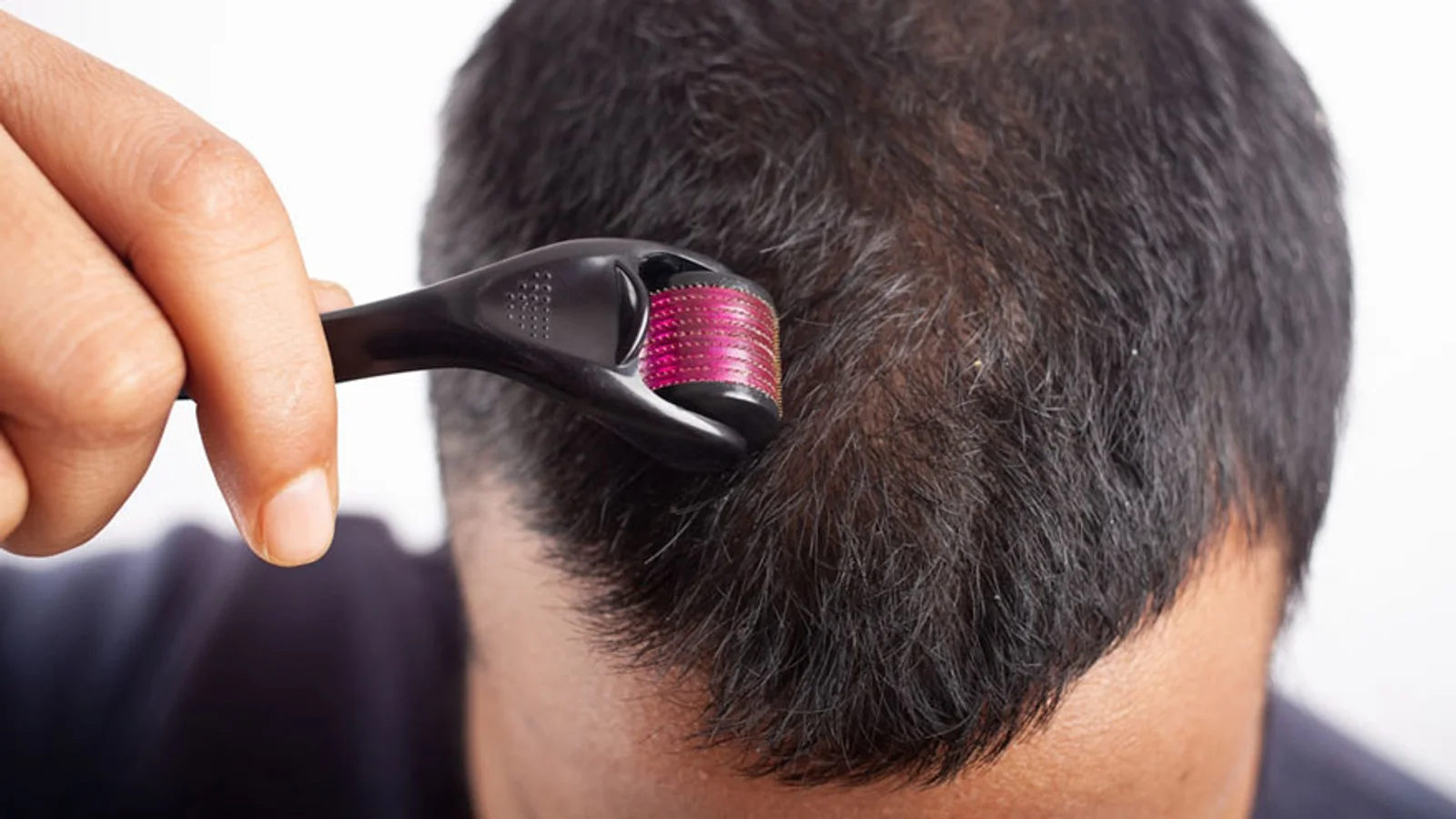
1. Androgenetic Alopecia (Pattern Hair Loss)
This is the most common form — affecting both men and women.
- Driven by genetics and sensitivity to DHT (dihydrotestosterone)
- Causes follicles to miniaturize over time
- Hair becomes thinner, shorter, and eventually stops growing
Can it be prevented?
Not entirely — but it can often be slowed significantly.
This is one of the clearest areas where science is on our side. Early intervention matters more than almost anything else.
From a clinical perspective, we often tell patients:
“We can’t change your genetics, but we can change how aggressively they express themselves.”
2. Telogen Effluvium (Stress-Related Shedding)
This type surprises patients the most.
Triggers include:
- Severe stress or illness
- Rapid weight loss
- Hormonal shifts (postpartum, thyroid issues)
- Surgery or emotional trauma
Hair enters the shedding phase prematurely — often 2–3 months after the trigger.
Can it be prevented?
Sometimes — and often reversed.
Once the underlying stressor is addressed, hair usually regrows within 6–12 months. The danger comes when telogen effluvium overlaps with underlying genetic hair loss, accelerating visible thinning.
3. Inflammatory or Scalp-Related Hair Loss
Conditions like:
- Seborrheic dermatitis
- Chronic folliculitis
- Autoimmune scalp inflammation
These damage the scalp environment itself.
Can it be prevented?
Yes — if diagnosed early.
Healthy hair cannot grow from an unhealthy scalp. At Arke Clinic, scalp evaluation is often the first step before any aesthetic or regenerative treatment is considered.
What Science Actually Supports for Hair Loss Prevention

Let’s separate evidence from hype.
FDA-Approved and Clinically Proven Options
1. Minoxidil (Topical or Oral)
- Extends the growth phase of hair follicles
- Improves blood flow and follicle activity
What patients should know:
Minoxidil does not “create” new follicles. It supports existing ones — which is why early use leads to better outcomes.
Stopping it abruptly can cause temporary shedding, which is often misunderstood as “making hair worse.”
2. Finasteride / Dutasteride (DHT Blockers)
- Reduce DHT levels, protecting follicles from miniaturization
- Most effective for genetic hair loss
Honest insight from practice:
Side effects are possible, but far less common than online forums suggest. Proper dosing, monitoring, and medical supervision matter.
In Korea, especially in plastic surgery and dermatology clinics in Gangnam, low-dose and tailored regimens are increasingly preferred.
Regenerative & Advanced Preventive Treatments
3. PRP (Platelet-Rich Plasma)
PRP uses your own growth factors to:
- Improve follicle vitality
- Increase hair thickness
- Reduce shedding
Results vary — but in early-stage hair loss, PRP can be a powerful stabilizer.
At Arke Clinic Gangnam, PRP is often combined with scalp health optimization rather than used as a standalone miracle.
4. Stem Cell & Growth Factor-Based Therapies
Still evolving, but promising.
These treatments aim to:
- Reactivate dormant follicles
- Improve the scalp’s regenerative environment
Science supports cautious optimism — but not unrealistic expectations.
Can Lifestyle Changes Prevent Hair Loss?
This is where advice online becomes oversimplified.
Nutrition: Important, But Not Magical
Iron, zinc, protein, and vitamin D deficiencies can worsen hair loss, but supplementation alone will not stop genetic thinning.
If nutrition were the main cause, hair loss would be far rarer.
Stress Management: Underestimated, Yet Real
Chronic stress raises cortisol levels, disrupts hormones, and alters hair cycling.
To be honest, stress doesn’t usually cause permanent hair loss — but it can accelerate what’s already programmed.
Scalp Care: The Forgotten Foundation
Think of the scalp as soil.
You wouldn’t expect healthy plants from inflamed, compacted ground. The same applies to hair follicles.
Regular cleansing, inflammation control, and proper evaluation are not cosmetic extras — they’re preventive medicine.
When Prevention Is No Longer Enough
This is a difficult conversation, but an important one.
Once follicles are completely inactive, no medication or injection can bring them back. This is when hair transplantation becomes the only restorative option.
However, even here, prevention still matters.
At clinics like Arke in Seoul, hair transplantation is approached as part of a long-term strategy, not a one-time fix. Stabilizing existing hair ensures that transplanted results remain natural over time.
A Surgeon’s Perspective: What Patients Rarely Hear
After years of working alongside aesthetic and surgical specialists, one truth stands out:
The biggest determinant of success isn’t the treatment — it’s timing.
Patients who seek care when they first notice change have exponentially more options than those who wait until density is visibly reduced.
Another rarely shared insight:
Over-treating is just as harmful as under-treating.
Hair loss prevention should be personalized — based on gender, age, scalp condition, hormones, and lifestyle. Cookie-cutter protocols often fail not because science is weak, but because biology is individual.
So — Is Hair Loss Prevention Possible?
Yes — but not in the way most people imagine.
Hair loss prevention is not about stopping time or overriding genetics. It’s about:
- Slowing progression
- Preserving existing follicles
- Maintaining scalp health
- Choosing evidence-based treatments early
When done correctly, prevention can mean keeping your current hair for decades longer than expected.
And for many patients, that’s more than enough.
Final Thoughts from Arke Clinic, Gangnam
At Arke Clinic Plastic Surgery and Aesthetic in Seoul, we believe hair health should be approached with the same philosophy as facial rejuvenation or body contouring: precision, personalization, and respect for natural biology.
Under the leadership of Dr. In-Bae Kim, whose medical background emphasizes long-term outcomes over quick fixes, patients are guided honestly — whether prevention, regenerative treatment, or surgical restoration is appropriate.
If you’ve been wondering whether it’s “too early” or “too late” to act, the truth is this:
The best time to address hair loss is the moment you start thinking about it.
If you’re considering hair loss prevention or advanced treatment options, consult with a trusted clinic in Gangnam, Seoul, where medical insight — not marketing — shapes your care.
More Medical Articles
Continue reading expert guides on procedure planning, anatomy, and post-operative care.

Lower Blepharoplasty: Minimally Invasive vs. Surgical Eye Outcomes
Lower Blepharoplasty: Minimally Invasive vs. Surgical Eye Outcomes Under-eye aging—characterized by puffiness (pseudo-herniation of fat) and dark circles—is a leading cosmetic concern among Koreans aged 30 to 70.
Learn More

Transconjunctival Blepharoplasty: No-Scar Recovery Benchmarks in Korea
Transconjunctival Blepharoplasty: No-Scar Recovery Benchmarks in Korea As South Korea’s demographic shifts toward a "super-aged" society—with those aged 65 and older projected to exceed 20% of the population by 2025—the demand for periorbital rejuvenation has…
Learn More

Healing the Heart: The Psychological Focus of Korean Revision Eye Surgery
Healing the Heart: The Psychological Focus of Korean Revision Eye Surgery In South Korea, often referred to as the "plastic surgery capital of the world," blepharoplasty (double eyelid surgery) is more than just a cosmetic trend; it is a cultural rite of…
Learn More