1:1 Customized Plastic Surgery & Aesthetic Medicine in Gangnam, Seoul — Led by Dr. In-Bae Kim
★ 5.0 Verified Patient Rating
en-US

Clinical Guide & Insights
How to Get Rid of Hooded Eyes for Good
Discover effective treatments and tips on how to get rid of hooded eyes for good. Achieve brighter, lifted eyes—learn more in our expert guide!
Schedule a ConsultationIntroduction
A medically grounded guide from Gangnam, Seoul
Hooded eyes are one of those features many people live with quietly — until something shifts.
It may happen gradually. Eye makeup no longer shows the way it used to. Photos seem to capture a heavier, more tired expression. Friends ask if you are exhausted, even when you feel perfectly fine. For some people, hooded eyes are part of their natural anatomy. For others, they appear slowly with aging, stress, or volume loss.
At Arke Clinic Plastic Surgery and Aesthetic, concerns about hooded eyes are among the most common reasons patients seek consultation. This includes local Korean patients as well as international visitors researching plastic surgery in Gangnam, often as part of a broader interest in facial rejuvenation in Seoul.
Almost every patient asks the same question:
“Is there a way to fix hooded eyes permanently — without looking unnatural?”
The answer is yes, but it depends entirely on understanding why the hooding exists in the first place.
What Hooded Eyes Actually Are
Hooded eyes occur when tissue from the upper eyelid descends over the natural eyelid crease, partially covering the visible lid. This can make the eyes appear smaller, heavier, or more fatigued, and in some cases can even affect peripheral vision.
From a surgical perspective, hooded eyes are not a single diagnosis. They are a visual outcome caused by multiple anatomical factors working together. These may include:
Excess or lax upper eyelid skin
Weakening of the levator muscle responsible for lifting the eyelid (ptosis)
Drooping of the brow or temple region with age
Loss of fat and soft tissue support around the eyes
Genetic eyelid structure and underlying bone anatomy
This complexity explains why two patients with similar-looking hooded eyes may require very different treatment plans.
At Arke Clinic Gangnam, hooded eyes are evaluated as part of the entire upper facial structure, not as an isolated eyelid issue. This comprehensive approach is essential for achieving results that look natural and last over time.
Why Non-Surgical Solutions Don’t Last

Many patients understandably prefer to start with non-surgical options. These may include:
Eyelid tape or glue used daily to create a visible crease
Botox injections aimed at lifting the brow
Ultrasound or radiofrequency treatments for skin tightening
Eye creams marketed to improve firmness or elasticity
In select cases of very mild hooding, these methods can offer temporary improvement. However, they do not address the deeper anatomical causes.
What is important for patients to understand is this:
Skin continues to stretch. Muscles weaken with time. Gravity does not stop.
Non-surgical treatments work on the surface. Hooded eyes, however, are usually the result of structural changes beneath the skin. Over time, patients often notice that non-surgical options require increasingly frequent maintenance while delivering less noticeable results.
For those seeking a long-term or permanent solution, surgical correction remains the most reliable approach.
3. Surgical Treatments That Provide Lasting Results
3.1 Upper Blepharoplasty (Upper Eyelid Surgery)
Upper blepharoplasty is one of the most effective procedures for correcting hooded eyes. It involves removing excess skin and reshaping the eyelid fold to restore a clearer, more open eye appearance.
However, modern eyelid surgery is not about aggressive removal. Over-resection can lead to hollowing, stiffness, or an unnatural “pulled” look.
At Arke Clinic, upper blepharoplasty focuses on:
Preserving ethnic and personal identity
Maintaining appropriate eyelid thickness and softness
Avoiding overexposure of the eyelid
Designing a fold that moves naturally with blinking and expression
For patients researching blepharoplasty in Seoul, it is important to understand that long-term success depends not on how much skin is removed, but on how carefully the eyelid’s anatomy is reconstructed.
When properly planned, upper blepharoplasty offers long-lasting — often permanent — improvement, with scars hidden discreetly within the natural eyelid crease.
3.2 Ptosis Correction: Addressing Muscle Weakness
In some patients, excess skin is not the main problem. Instead, the eyelid-opening muscle itself is weak.
This condition, known as ptosis, can cause the eyelid to sit lower than normal, creating or worsening the appearance of hooded eyes.
Common signs that ptosis correction may be necessary include:
One eye opening less than the other
Chronic eyebrow lifting to compensate for limited eyelid opening
A consistently tired or sleepy appearance
Limited improvement after skin-only eyelid surgery
Ptosis correction strengthens or repositions the levator muscle, restoring proper eyelid elevation. When combined with blepharoplasty, it addresses both function and aesthetics, resulting in more stable and natural-looking outcomes.
3.3 Brow or Temple Lifting: Treating the Source, Not the Symptom
In many cases, the eyelid itself is not sagging — the brow is descending.
As the brow and temple area drop with age, they push tissue downward over the upper eyelid, creating hooding. If eyelid skin alone is removed in these cases, it can lead to imbalance or even worsen the heaviness.
A conservative brow or temple lift can:
Restore natural eye openness
Reduce hooding without excessive eyelid skin removal
Improve overall upper facial balance
This approach is commonly incorporated into advanced Seoul facial rejuvenation strategies, especially for patients in their 40s and beyond, where brow descent becomes more prominent.
3.4 Volume Restoration with Microfat Grafting
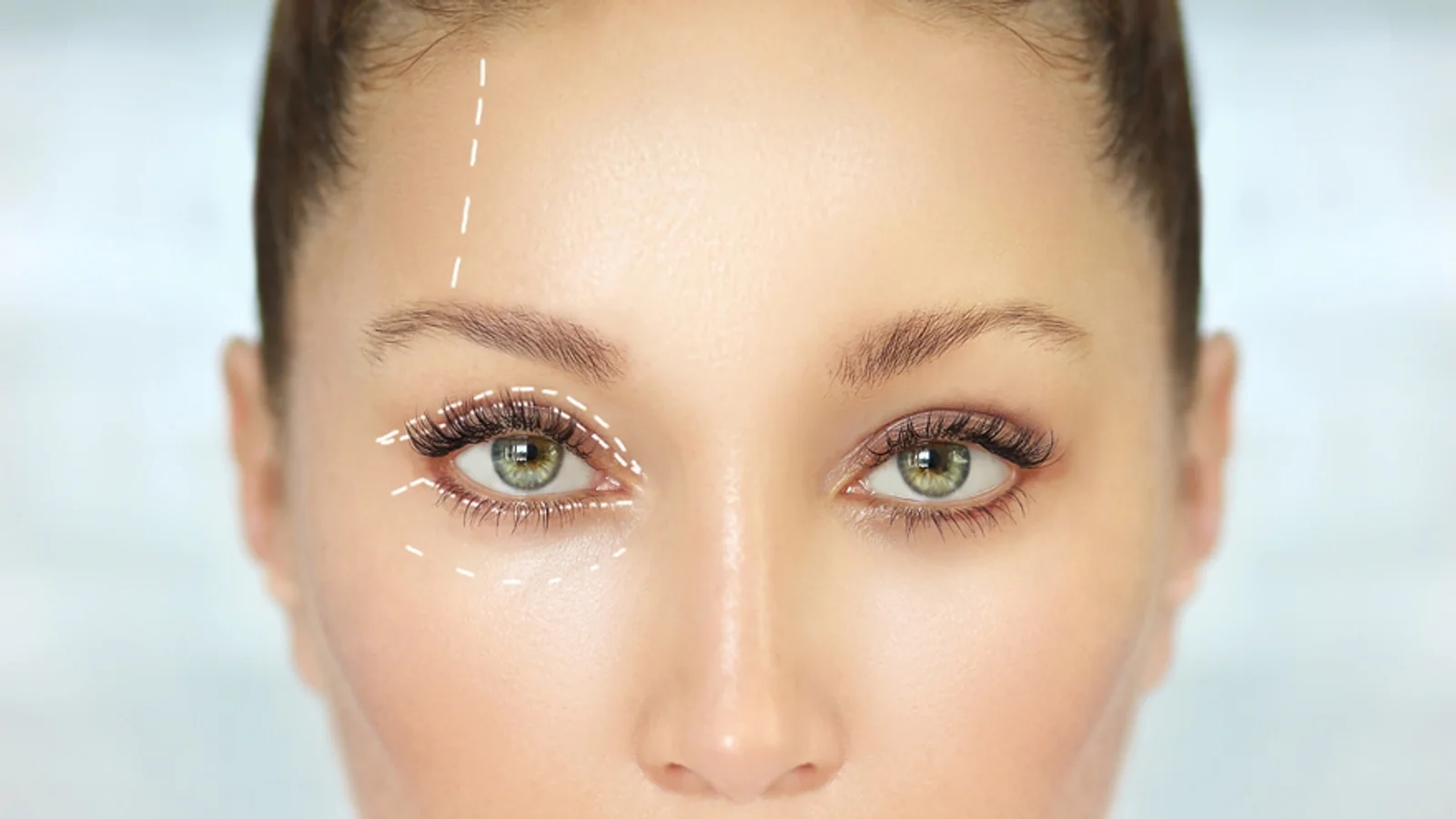
Volume loss is one of the most underestimated contributors to hooded eyes.
As fat diminishes around the temples and upper eyelids:
Skin loses support and collapses downward
Eyelid folds deepen
The eyes may appear both sunken and heavy at the same time
Microfat grafting uses a patient’s own refined fat to restore structural support, not exaggerated fullness. The aim is to re-establish balance and support — similar to reinforcing the framework of a building rather than inflating its surface.
At Arke Clinic, microfat grafting is often combined with eyelid surgery to improve softness, symmetry, and long-term stability of results.
Why “Permanent” Results Depend on the Surgeon
One reality is rarely discussed openly:
Most unsatisfactory eyelid outcomes occur not because the wrong procedure was chosen, but because the face was evaluated in isolation.
Hooded eyes are a symptom, not a standalone diagnosis.
Under the leadership of Dr. In-Bae Kim, Arke Clinic emphasizes:
One-to-one, in-depth consultations
Full facial and structural assessment
Conservative correction designed to age naturally
Dr. Kim’s academic background, including a PhD in Medicine from Yonsei University and his experience as a former outpatient professor at Seoul St. Mary’s Hospital, informs a philosophy focused on long-term harmony rather than short-term change.
Will the Results Look Natural?
This is the concern most patients hesitate to voice directly.
The fear is not surgery itself — it is losing familiarity.
A natural result means:
Your eyes still look like your own
Facial expressions remain soft and balanced
Others notice you look rested, not altered
When hooded eyes are corrected appropriately, patients often hear:
“You look refreshed — but I can’t tell what changed.”
That subtlety is intentional and reflects careful planning rather than minimal treatment.
Recovery and Longevity
Typical recovery expectations include:
Initial swelling and bruising: 1–2 weeks
Noticeable improvement: 2–4 weeks
Scar maturation and softening: 3–6 months
Longevity: 10 years or longer, often permanent
With precise technique and proper post-operative care, results age harmoniously with the face instead of becoming more noticeable over time.
Who Is a Good Candidate?
You may be a suitable candidate if:
Hooded eyes affect your appearance or vision
Eye makeup is consistently difficult to apply
Non-surgical treatments no longer provide improvement
You want a long-term solution rather than repeated maintenance
Age alone does not determine candidacy — anatomy, skin quality, and muscle function do.
Final Perspective from Gangnam
Correcting hooded eyes permanently is not about choosing the most dramatic intervention. It is about selecting the right combination of techniques, performed by a surgeon who understands balance, restraint, and time.
If you are considering eyelid correction or facial rejuvenation, a personalized consultation at a trusted clinic like Arke Clinic Gangnam can help clarify what your eyes truly need — and what they do not.
Often, the best aesthetic outcomes are quiet ones — the kind where you look in the mirror and simply recognize yourself again.
More Medical Articles
Continue reading expert guides on procedure planning, anatomy, and post-operative care.

Lower Blepharoplasty: Minimally Invasive vs. Surgical Eye Outcomes
Lower Blepharoplasty: Minimally Invasive vs. Surgical Eye Outcomes Under-eye aging—characterized by puffiness (pseudo-herniation of fat) and dark circles—is a leading cosmetic concern among Koreans aged 30 to 70.
Learn More

Transconjunctival Blepharoplasty: No-Scar Recovery Benchmarks in Korea
Transconjunctival Blepharoplasty: No-Scar Recovery Benchmarks in Korea As South Korea’s demographic shifts toward a "super-aged" society—with those aged 65 and older projected to exceed 20% of the population by 2025—the demand for periorbital rejuvenation has…
Learn More

Healing the Heart: The Psychological Focus of Korean Revision Eye Surgery
Healing the Heart: The Psychological Focus of Korean Revision Eye Surgery In South Korea, often referred to as the "plastic surgery capital of the world," blepharoplasty (double eyelid surgery) is more than just a cosmetic trend; it is a cultural rite of…
Learn More