1:1 Customized Plastic Surgery & Aesthetic Medicine in Gangnam, Seoul — Led by Dr. In-Bae Kim
★ 5.0 Verified Patient Rating
en-US

Clinical Guide & Insights
How to Avoid a Fake Nose Job Look: Tips from Top Surgeons
Discover expert tips from top surgeons on how to avoid a fake nose job look and achieve natural, balanced results. Learn more today!
Schedule a ConsultationIntroduction
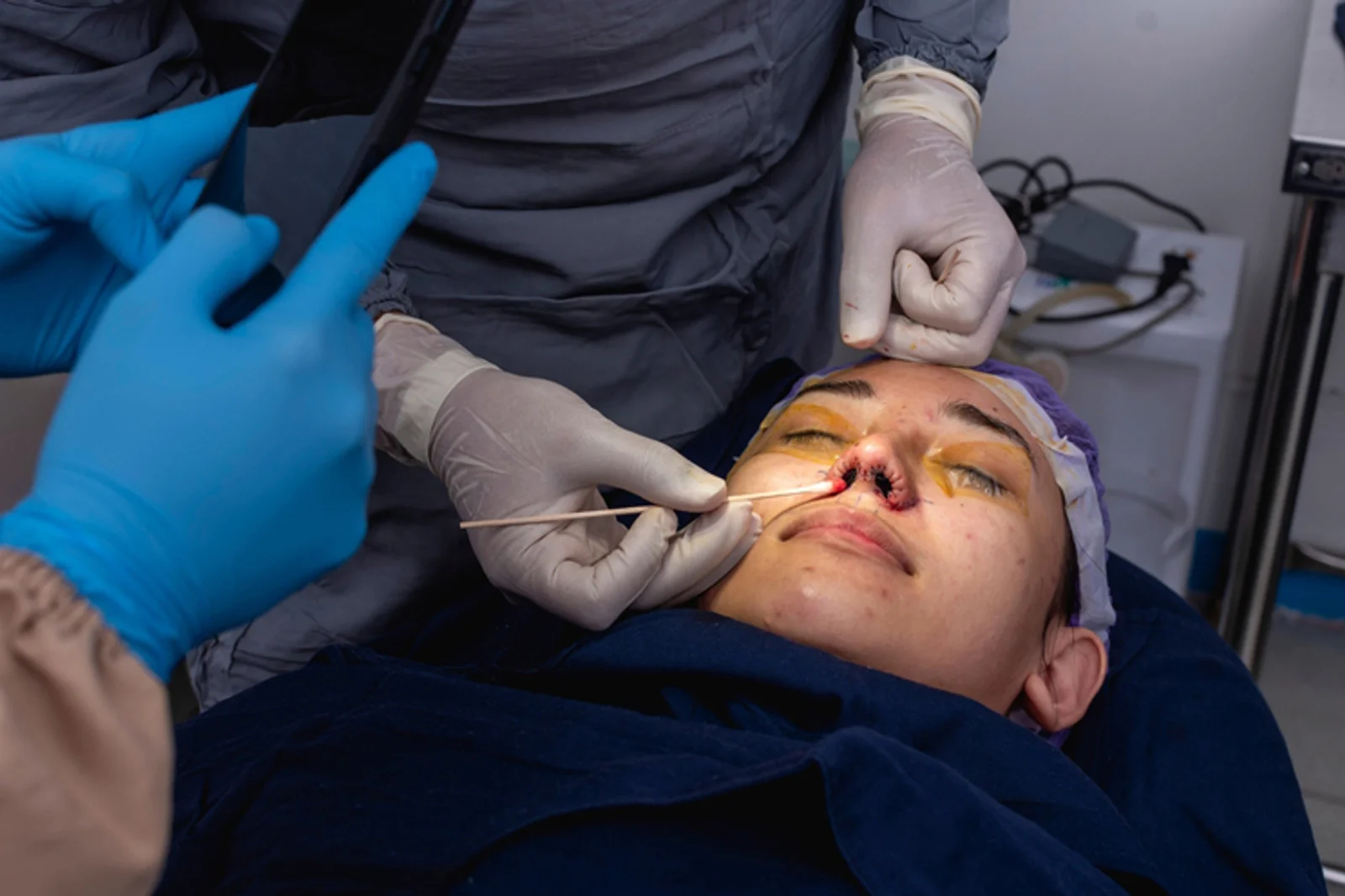
In Seoul — especially in the renowned aesthetic district of Gangnam — rhinoplasty has transformed dramatically over the last two decades. What was once a pursuit of perfection through sharp, high-bridged noses has evolved into something far more refined: harmony, balance, and individuality.
At Arke Clinic, we believe that the most beautiful nose is one that doesn’t announce itself. It simply belongs — in proportion to your face, expressive in motion, and gracefully in tune with your natural features.
Yet achieving this natural look requires more than technical precision. It demands a deep understanding of anatomy, artistry, and restraint. To avoid the “fake nose job” look, patients and surgeons must work together — guided by subtlety rather than trends.
Why Some Nose Jobs Look “Fake”
It’s easy to recognize an unnatural result — overly narrow bridges, rigid tips, or noses that seem out of sync with the rest of the face. But few understand why these results occur. The truth is, a “fake” nose isn’t just about the surgeon’s technique; it often stems from planning that overlooks the individual.
1. Overcorrection and Standardized Templates
In the early 2000s, Korea’s cosmetic industry was shaped by global ideals of beauty. Many patients requested higher, narrower bridges, mirroring Western aesthetics. However, this “one-style-fits-all” approach didn’t always respect East Asian anatomy — particularly softer cartilage, thicker skin, and shorter nasal frameworks.
The result? Noses that looked sculpted rather than organic. Over time, the shift in aesthetic philosophy has been toward customization, recognizing that a refined yet natural nose enhances — not alters — one’s identity.
2. Ignoring Facial Harmony
The nose doesn’t exist in isolation. It’s the central axis that influences how the eyes, lips, and chin are perceived. When surgeons focus solely on the nose without considering the full facial composition, proportions can become skewed.
For example, a bridge that’s too tall may create an unnatural shadow between the eyes. Similarly, an overly lifted tip can exaggerate the nostrils, leading to a “pinched” appearance that draws unwanted attention.
3. Stiff or Shiny Skin After Implant Use
One of the most common signs of an artificial-looking rhinoplasty is a shiny or overly tight nasal surface. This happens when the implant is too large, placed too superficially, or when the patient’s skin is too thin to adequately cover it. Over time, pressure from the implant can even lead to skin thinning or visibility of implant edges — a concern often addressed in revision rhinoplasty cases at Arke Clinic.
4. Lack of Tip Mobility
The nose, especially the tip, should move subtly with facial expressions. When excessive grafting or rigid materials are used, that natural motion is lost. A frozen or overly pointed tip can betray even a well-sculpted bridge. Surgeons call this a “static tip deformity” — a key marker of an unnatural nose job.
The Principles of a Natural-Looking Nose

At its heart, natural rhinoplasty is about balance — respecting both anatomy and individuality. At Arke Clinic, three core principles define our approach: proportion, softness, and personalization.
1. Proportion: Seeing the Face as a Whole
A skilled rhinoplasty surgeon doesn’t just see a nose — they see the landscape of the face. Before every surgery, Dr. In-Bae Kim performs a full facial analysis, studying how light and shadow move across the features, how the nose aligns with the chin, and how subtle changes might affect the overall impression.
For example, some patients benefit from a gentle S-curve bridge with a rounded, natural tip. Others may need only minor refinement to achieve balance. The key is understanding the architecture of each face rather than following a template.
Surgeon’s insight:
“Even a one-millimeter adjustment can alter facial balance dramatically. That’s why precision and restraint matter more than dramatic change.”
— Dr. In-Bae Kim, Arke Clinic, Gangnam
2. Softness: Preserving Tissue Integrity
The nose is not just bone and cartilage; it’s also skin, fat, and connective tissue. Over-aggressive surgery that removes too much soft tissue or relies excessively on implants can make the nose appear sculpted or rigid.
Modern Korean rhinoplasty prioritizes structural preservation — maintaining the nose’s natural framework while enhancing its aesthetic flow. At Arke Clinic, autologous cartilage (from the septum, ear, or rib) is often used instead of rigid synthetic implants for the tip. This ensures a softer, more natural texture that moves with expression.
3. Personalization: Designing Around Identity
Your ideal nose isn’t defined by someone else’s photo. It’s defined by the balance of your unique features. Advanced clinics in Gangnam, including Arke, now employ 3D imaging, simulation technology, and digital morphing to preview how changes will affect the face as a whole.
This step is invaluable — it helps patients visualize subtle adjustments in dorsal height, nasal width, or alar base before surgery. It also encourages realistic expectations, reducing the risk of overcorrection.
Modern Techniques That Prevent a “Fake” Appearance
Behind every natural-looking result lies meticulous surgical planning and technique. The following methods — widely used by top rhinoplasty surgeons in Seoul — help ensure that outcomes look elegant and enduring rather than artificial.
1. Structural Rhinoplasty
Traditional rhinoplasty often focused on reduction — shaving, removing, or cutting cartilage. Structural rhinoplasty, by contrast, rebuilds and reinforces the internal architecture. By strengthening the nasal framework, surgeons can create stable, symmetrical results that resist collapse over time. This approach is especially critical in revision cases where prior surgeries have weakened the internal support.
2. Hybrid Grafting: Cartilage + Implant Balance
For patients seeking higher bridges (common in Korean rhinoplasty), surgeons may use a hybrid approach — combining a soft silicone or Gore-Tex implant for dorsal height with cartilage reinforcement for the tip. This creates a refined profile while preserving a natural, flexible tip that doesn’t appear “fixed” or lifted unnaturally.
3. Microfat and Soft Tissue Grafting
Microfat grafting, a technique refined in advanced facial surgeries, restores softness and volume to areas that appear too sharp or thin after implant-based rhinoplasty. Using the patient’s purified fat, surgeons at Arke Clinic layer microfat along the nasal dorsum and tip to create a smoother, more natural contour. It’s also valuable for revision rhinoplasty patients whose skin has lost elasticity.
4. Preserving Ligament and Tip Mobility
One of the secrets behind a natural nose is motion. Experienced surgeons take care to preserve the delicate ligaments that allow the nose to move with facial expression. During surgery, grafts are shaped and fixed with precision to support — not restrict — this natural flexibility.
Common Patient Concerns — and Expert Answers

Even with modern techniques, patients often have anxieties about looking “too done.” Here are some of the most frequent concerns Dr. Kim addresses in consultation:
“I don’t want a nose that looks too sharp or lifted.”
This is a valid and common concern. At Arke Clinic, the nasal projection and rotation are calculated based on facial ratios — typically maintaining a nasolabial angle of 95–100° for women and slightly less for men. This ensures a graceful upward contour without the exaggerated “doll-like” tip.
“Will my nose still move naturally?”
Yes — if the surgeon uses cartilage and preserves key ligaments, your nose will retain natural flexibility. We test tip mobility during surgery to confirm that it moves with facial expressions, ensuring that your post-op smile still looks like you.
“Can I fix a nose that already looks fake?”
Revision rhinoplasty can restore naturalness, though it’s technically complex. It often involves removing or replacing old implants, reinforcing internal support, and sometimes performing microfat grafting to re-soften the appearance. At Arke Clinic, Dr. Kim frequently performs revision surgery for patients from both Korea and overseas who wish to correct overly defined or rigid results.
“Will it look natural in photos and under different lighting?”
A well-designed nose aligns harmoniously with facial light dynamics — meaning it looks natural not only in person but also on camera. Through detailed preoperative imaging, surgeons ensure that the nose complements the face’s natural shadow and reflection patterns.
Choosing the Right Surgeon in Seoul or Gangnam
Selecting the right rhinoplasty surgeon is perhaps the most important decision in achieving a natural look. Here’s what discerning patients should look for:
Facial Plastic Surgery Expertise
Choose a board-certified facial plastic surgeon with a deep understanding of nasal anatomy and aesthetic proportion — not just a general cosmetic practitioner.Experience with Ethnic Variation
East Asian noses differ in cartilage structure, skin thickness, and dorsal profile. A surgeon like Dr. In-Bae Kim, with over 17 years of experience treating diverse patients, understands these anatomical nuances and tailors techniques accordingly.Evidence of Natural Results
Review before-and-after photos carefully. Natural results show variation — each patient looks unique, yet balanced. Overly uniform noses suggest a template approach, which often leads to the “fake” look patients want to avoid.In-Depth Consultation and Simulation
Avoid rushed consultations or one-size-fits-all promises. Personalized planning, digital simulation, and open discussion about your expectations are non-negotiable steps toward a successful, natural-looking outcome.
The Importance of Post-Operative Care
Even the most skillful surgery can appear unnatural if recovery isn’t managed properly. Swelling, scar stiffness, or uneven healing can distort early results.
At Arke Clinic, post-op care is treated as an essential phase of the aesthetic journey. We provide customized recovery protocols including:
Ultrasound and LED therapy to reduce inflammation and fibrosis.
Lymphatic drainage treatments to promote natural contour definition.
Long-term follow-ups to monitor nasal adaptation over several months.
This extended care ensures the final shape settles naturally into your facial structure, maintaining smoothness and authenticity over time.
The Philosophy Behind Natural Rhinoplasty
To be honest, the most successful rhinoplasty is one that doesn’t draw attention at all. It allows others to notice your expression, not your surgery. A well-performed nose enhancement restores balance and confidence, not uniformity.
At Arke Clinic, our philosophy is rooted in subtle artistry — the belief that enhancement should celebrate individuality rather than conform to trends. Whether you’re seeking your first nose surgery or a revision rhinoplasty in Seoul, our goal is to help you rediscover harmony, not reinvent identity.
If you’ve been considering facial rejuvenation or rhinoplasty, visit a trusted, precision-focused clinic like Arke Clinic in Gangnam, where medical science and aesthetic sensitivity work hand in hand to create results that age gracefully, move naturally, and feel entirely your own.
More Medical Articles
Continue reading expert guides on procedure planning, anatomy, and post-operative care.

Lower Blepharoplasty: Minimally Invasive vs. Surgical Eye Outcomes
Lower Blepharoplasty: Minimally Invasive vs. Surgical Eye Outcomes Under-eye aging—characterized by puffiness (pseudo-herniation of fat) and dark circles—is a leading cosmetic concern among Koreans aged 30 to 70.
Learn More

Transconjunctival Blepharoplasty: No-Scar Recovery Benchmarks in Korea
Transconjunctival Blepharoplasty: No-Scar Recovery Benchmarks in Korea As South Korea’s demographic shifts toward a "super-aged" society—with those aged 65 and older projected to exceed 20% of the population by 2025—the demand for periorbital rejuvenation has…
Learn More

Healing the Heart: The Psychological Focus of Korean Revision Eye Surgery
Healing the Heart: The Psychological Focus of Korean Revision Eye Surgery In South Korea, often referred to as the "plastic surgery capital of the world," blepharoplasty (double eyelid surgery) is more than just a cosmetic trend; it is a cultural rite of…
Learn More