1:1 Customized Plastic Surgery & Aesthetic Medicine in Gangnam, Seoul — Led by Dr. In-Bae Kim
★ 5.0 Verified Patient Rating
en-US


Clinical Guide & Insights
Filler Migration: What Patients Should Watch Out For
Discover the causes and signs of filler migration, how to spot complications early, and what patients can do to ensure safe, natural-looking outcomes.
Schedule a ConsultationIntroduction

By Arke Clinic Plastic Surgery & Aesthetic — Gangnam, Seoul
To be honest, most patients don’t think about filler migration until they’ve either seen it happen to a friend or noticed a subtle heaviness in their own features months after treatment. In the consultation room at our Gangnam clinic, we hear the same quiet question again and again — “Is my filler moving?” It’s whispered with a mix of worry and embarrassment, as if something must have gone wrong.
The truth is more nuanced. Hyaluronic acid fillers are safe, incredibly useful tools in modern aesthetic medicine. But they are also dynamic materials that live within a dynamic face. They respond to movement, tissue quality, injection technique, and time. Understanding how and why filler migration happens doesn’t just prevent complications — it empowers patients to make smarter decisions, especially in a country like South Korea where facial rejuvenation is refined to an art form.
As surgeons who work daily with structural anatomy, we don’t simply think of fillers as “adding volume.” We think of them as altering tension, weight, and flow. When they migrate, they disrupt balance, much like adding a brushstroke too far from where the artist intended. And patients can sense that — even before it becomes visibly obvious.
What Filler Migration Actually Is (And What It Is Not)
Many online explanations reduce filler migration to “the filler moved from one spot to another,” but clinically, it’s more precise than that. Migration refers to unintended displacement of dermal filler from the injection site into neighboring tissues, creating puffiness, ridges, asymmetry, or shadow changes. It’s not the same as swelling, nor is it the same as filler naturally softening over time.
At Arke Clinic in Gangnam, where a large portion of international patients seek subtle facial rejuvenation, we see migration most commonly in:
The tear troughs
The lips
The nasolabial fold-to-cheek junction
The nose (after nonsurgical rhinoplasty)
Each of these regions has one thing in common: thin tissue planes where filler can easily track unless placed with meticulous control. That’s why technique and product selection matter more than most people realize.
What patients often misunderstand is that migration doesn’t always look dramatic. Especially in Seoul, where cosmetic trends lean natural, the earliest signs are subtle — a small bulge above the lip border, a dull heaviness under the eyes, or a softening of the nasal bridge shape after a nonsurgical rhinoplasty.
Why Filler Migration Happens: Beyond the Usual Explanations
There are textbook reasons — incorrect plane, too much volume, overly soft filler, high mobility area. But in the operating room and consultation chair, we see deeper layers that aren’t often discussed publicly.
1. Tissue Memory and Micro-Instability
Faces that have undergone repeated treatments—especially in medical tourism hotspots like Seoul—develop micro-instabilities. Old filler remnants, even when not visible, alter tissue tension. If a new filler is introduced, it may follow the path of least resistance, traveling into those softened planes.
Surgeons feel this the moment the needle meets the tissue; patients rarely know it’s happening.
2. Muscle Behavior Matters More Than People Think
For example, in the lips, the orbicularis oris is constantly contracting, compressing, and stretching. A filler that seems perfectly placed on day one may be pushed outward if it’s not cohesive enough.
I often tell patients: “The lips are not a static sculpture — they’re a living hinge.”
3. Overcorrecting the Tear Trough
In the pursuit of a bright under-eye, many practitioners worldwide inject too superficially into a fragile region. In our Seoul practice, patients frequently come in after treatment elsewhere because their cheeks look swollen, not their actual under-eyes. What really happened? The filler migrated downhill into the malar fat pads.
4. The Nose: The Most Misunderstood Site
Nonsurgical rhinoplasty is extremely popular in Gangnam and across Korea. But the nasal bridge has tight compartments, and when injected repeatedly over the years, the filler can spread sideways or upward, blurring the natural contours.
This is why at Arke Clinic, Dr. In-Bae Kim evaluates not just the bridge, but the entire dorsal line and tip structure before deciding whether filler — or surgical rhinoplasty — is the safer option.
Early Warning Signs Patients Should Watch For
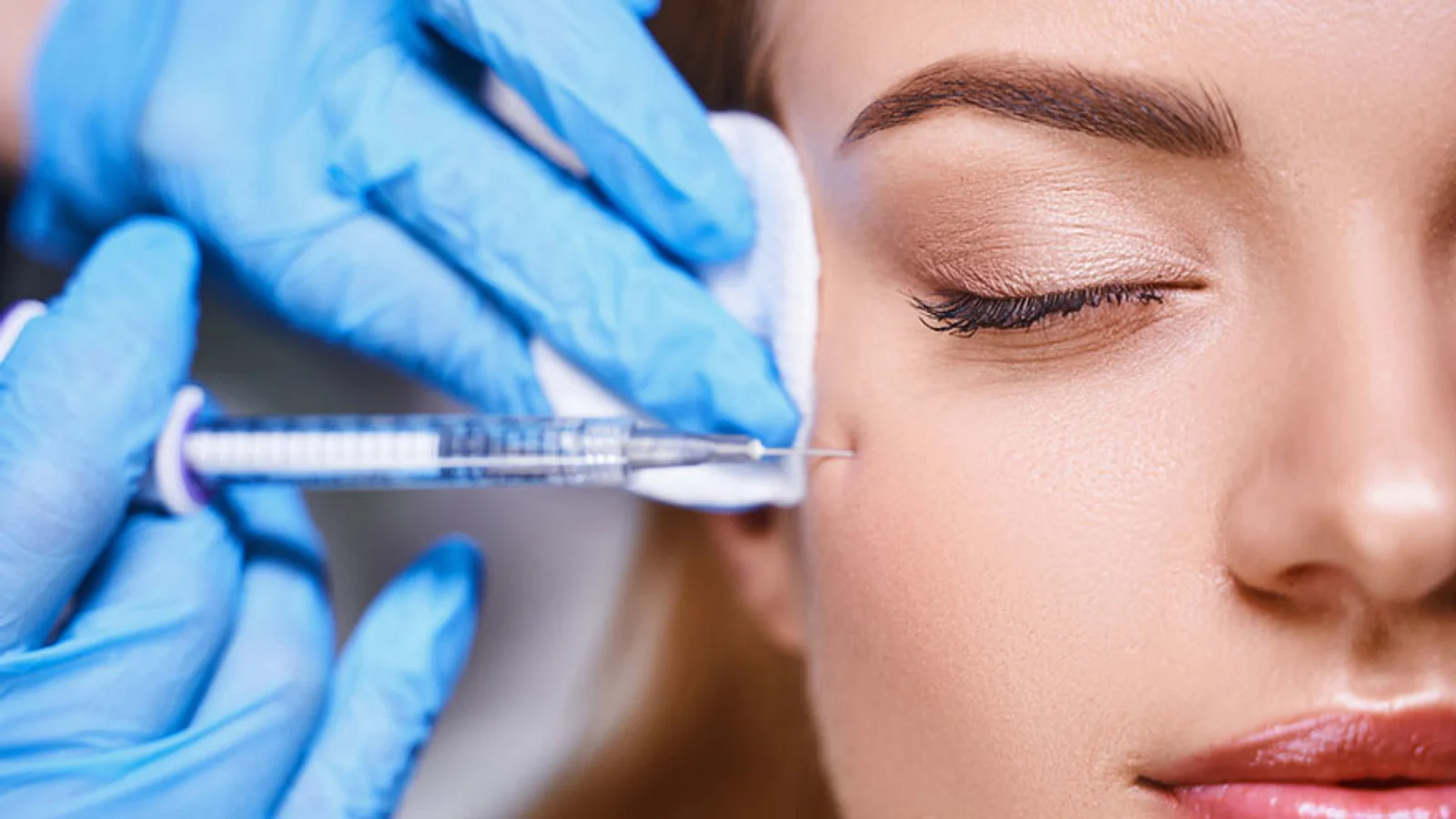
If you’re reading this because something feels “off,” trust that instinct. Many patients sense migration before it’s visible. These are the signs we advise you to pay attention to:
A heaviness in the area
Not pain — just a weighted sensation, especially when smiling.
A small, persistent puffiness that doesn’t behave like normal swelling
Swelling should peak early and fade. Migration creates a stable puff or ridge.
Shadow changes
Especially under the eyes. Even a millimeter of displacement can change the way light falls across the midface.
Loss of border definition
In the lips, this might look like soft “bleeding” of volume into the upper lip skin.
In the nose, it may appear as a broadened bridge instead of a smooth, narrow line.
Asymmetry that wasn’t there before
Migration is rarely symmetrical; even a slight shift becomes noticeable in Korean-style photography where lighting is very even.
You don’t need a medical eye to see these signs — you just need to be taught what to look for.
Does Filler Migration Mean Something Was Done Wrong?
Not necessarily. Patients often fear that migration means a mistake occurred. But fillers behave differently in every face. Even with perfect technique, migration can happen in:
Highly animated areas
Very thin or elastic skin
Patients who massage or sleep heavily on the treated area
Regions that already contain older filler
In South Korea, where facial rejuvenation has become highly sophisticated, many clinics see second or third-round treatments from patients who didn’t know prior filler still remained. Migration may occur simply because a new filler is trying to settle into an already-compromised plane.
To be honest, what many patients overlook is how long filler can linger — sometimes years, especially around the eyes and nose.
How Surgeons Diagnose Filler Migration (What Really Happens in the Room)
At Arke Clinic, when a patient comes in with concerns, we don’t start by dissolving. We start by mapping.
1. Visual and Tactile Assessment
Dr. Kim will gently palpate the tissue. Migration often feels like a slurry — soft, slightly mobile, and not well-integrated.
2. Anatomical Light Mapping
We examine how the shadows behave when light passes from multiple angles. This technique, widely used in Korean facial aesthetics, reveals volume irregularities without over-relying on ultrasound.
3. Reviewing the Patient’s Filler History
Most patients underestimate the amount they’ve had over the years. But filler history is essential; old filler creates unpredictable tissue planes.
4. Ultrasound for Complex Cases
When needed, high-resolution ultrasound helps confirm whether the filler is superficial, deep, or fragmented. It’s especially useful for undereye and nasal cases.
When Dissolving Is the Right Decision — and When It’s Not

Hyaluronidase is a wonderful tool, but we approach it with restraint. Dissolving filler in sensitive areas like the under-eye can temporarily deflate the face if overused.
When we recommend dissolving:
The filler is causing contour irregularities
The filler has migrated into a shadow-forming plane
There is discoloration or Tyndall effect
The filler is obstructing future treatment (e.g., for patients wanting surgical rhinoplasty)
When we avoid dissolving:
The migration is minimal and can be corrected with a micro-adjustment
The filler is structurally supporting aging tissue in other ways
Dissolving would lead to aesthetic imbalance
Sometimes the best approach is phased: dissolve only the unwanted portions, let the tissue settle, then re-evaluate.
This is the kind of long-term strategy that reflects Arke Clinic’s philosophy — not quick fixes, but carefully curated outcomes.
Preventing Filler Migration: What Patients Can Actually Control
While technique and anatomy matter most, patients do play a role. Based on our experience with both local and international patients in Gangnam, here’s what actually makes a difference:
Be honest about your filler history
Patients often say, “I think I had something under the eyes a few years ago, but I’m not sure.”
That uncertainty can change everything about the plan.
Avoid high-pressure environments in the first week
Intense massages, sauna heat, and vigorous exercise may not “push” filler, but they can increase swelling and fluidity — especially in softer gels.
Sleep positioning is a bigger factor than you think
We’ve seen migration patterns that correlate almost perfectly with side-sleeping habits.
Choose a clinic that respects conservative dosing
Dr. Kim frequently tells patients, “If the first 1 mL didn’t achieve your goals, adding another 1 mL won’t necessarily help.”
Skill comes from placing just enough.
Korea’s Aesthetic Culture and Why Migration Matters Here
In Seoul — particularly in neighborhoods like Gangnam where medical tourists seek refined results — the aesthetic standard is incredibly high. Patients want their treatments to be undetectable. Even a subtle shift in filler placement can disrupt facial harmony in a culture that values clean, natural lines.
Filler migration stands out more in Korea for three reasons:
Smaller facial proportions make minor distortions more obvious.
Bright, even lighting in daily life (cafés, offices, subway stations) exposes inconsistencies.
A preference for minimalistic enhancement means anything “puffy” looks unnatural.
This is why clinics like Arke place enormous emphasis on precision and restraint.
When Filler Migration Is a Sign You May Need a Different Treatment
Sometimes migration doesn’t mean the filler failed — it means the chosen solution wasn’t the right one for your anatomy.
If your tear trough filler keeps migrating:
You may be a better candidate for microfat grafting or lower blepharoplasty. In Seoul, many patients prefer microfat because it integrates more naturally with movement.
If nose filler keeps shifting:
You may benefit from surgical rhinoplasty, especially if you prefer a stable, long-term result.
Arke Clinic frequently evaluates patients who have had years of nonsurgical rhinoplasty elsewhere and now want structural refinement.
If lip filler repeatedly spreads:
Your lip anatomy may respond better to extremely cohesive gels or to subtler shaping techniques rather than volume-focused injections.
Migration is not a failure — it’s information.
What Patients Tell Us After Fixing Their Migration Issues
After corrective treatment at Arke Clinic, we often hear:
“My face feels lighter.”
“I look like myself again.”
“I didn’t realize how much the migrated filler was changing my expression.”
That last one is key. Migration doesn’t just distort shape — it can alter the emotion your face conveys. A small bulge under the eyes can make you look tired. Puffiness in the nasolabial area can make you look heavier.
When restored correctly, patients feel an immediate emotional relief.
If You’re Worried About Filler Migration Right Now
It may be mild. It may be easily fixable. Or it may signal that you need a different approach altogether. What matters is choosing a clinic that treats filler as a structural tool — not a quick aesthetic shortcut.
Arke Clinic in Gangnam offers detailed facial analysis, conservative filler planning, dissolving options, and alternatives like microfat grafting, surgical rhinoplasty, and tailored facial rejuvenation. Under the guidance of Dr. In-Bae Kim — whose background blends academic rigor with over 17 years of surgical experience — patients receive careful, one-to-one care.
If something feels “off,” don’t wait for it to become visible. Schedule a consultation, whether at Arke or with a trusted local specialist, and let an experienced surgeon evaluate the tissue directly.
Your face carries your expression, your confidence, your personality — and with the right approach, it should continue to do so naturally.
More Medical Articles
Continue reading expert guides on procedure planning, anatomy, and post-operative care.

Lower Blepharoplasty: Minimally Invasive vs. Surgical Eye Outcomes
Lower Blepharoplasty: Minimally Invasive vs. Surgical Eye Outcomes Under-eye aging—characterized by puffiness (pseudo-herniation of fat) and dark circles—is a leading cosmetic concern among Koreans aged 30 to 70.
Learn More

Transconjunctival Blepharoplasty: No-Scar Recovery Benchmarks in Korea
Transconjunctival Blepharoplasty: No-Scar Recovery Benchmarks in Korea As South Korea’s demographic shifts toward a "super-aged" society—with those aged 65 and older projected to exceed 20% of the population by 2025—the demand for periorbital rejuvenation has…
Learn More

Healing the Heart: The Psychological Focus of Korean Revision Eye Surgery
Healing the Heart: The Psychological Focus of Korean Revision Eye Surgery In South Korea, often referred to as the "plastic surgery capital of the world," blepharoplasty (double eyelid surgery) is more than just a cosmetic trend; it is a cultural rite of…
Learn More