1:1 Customized Plastic Surgery & Aesthetic Medicine in Gangnam, Seoul — Led by Dr. In-Bae Kim
★ 5.0 Verified Patient Rating
en-US


Clinical Guide & Insights
Dorsal Hump Removal: How to Fix a Hump Nose Safely
Discover safe, effective options for dorsal hump removal. Learn how to fix a hump nose with expert advice and surgical or non-surgical solutions.
Schedule a ConsultationIntroduction

When people talk about wanting a “straighter” or more “refined” nose, they’re often describing what surgeons call a dorsal hump. This small bump or convexity along the bridge of the nose can dominate a profile and make the nose appear larger or less harmonious with the rest of the face. Some patients come to us after years of disliking their side-view photos; others are surprised to learn that a hump can be corrected quite precisely through modern rhinoplasty.
But as simple as “shaving down a bump” may sound, the reality is far more nuanced. Removing a dorsal hump safely requires not just technical skill but also artistry, foresight, and—above all—a respect for nasal function. At Arke Clinic in Gangnam, we approach hump removal as part of a larger balance: creating a natural, proportionate profile while protecting the nose’s structural integrity.
What Exactly Is a Dorsal Hump?
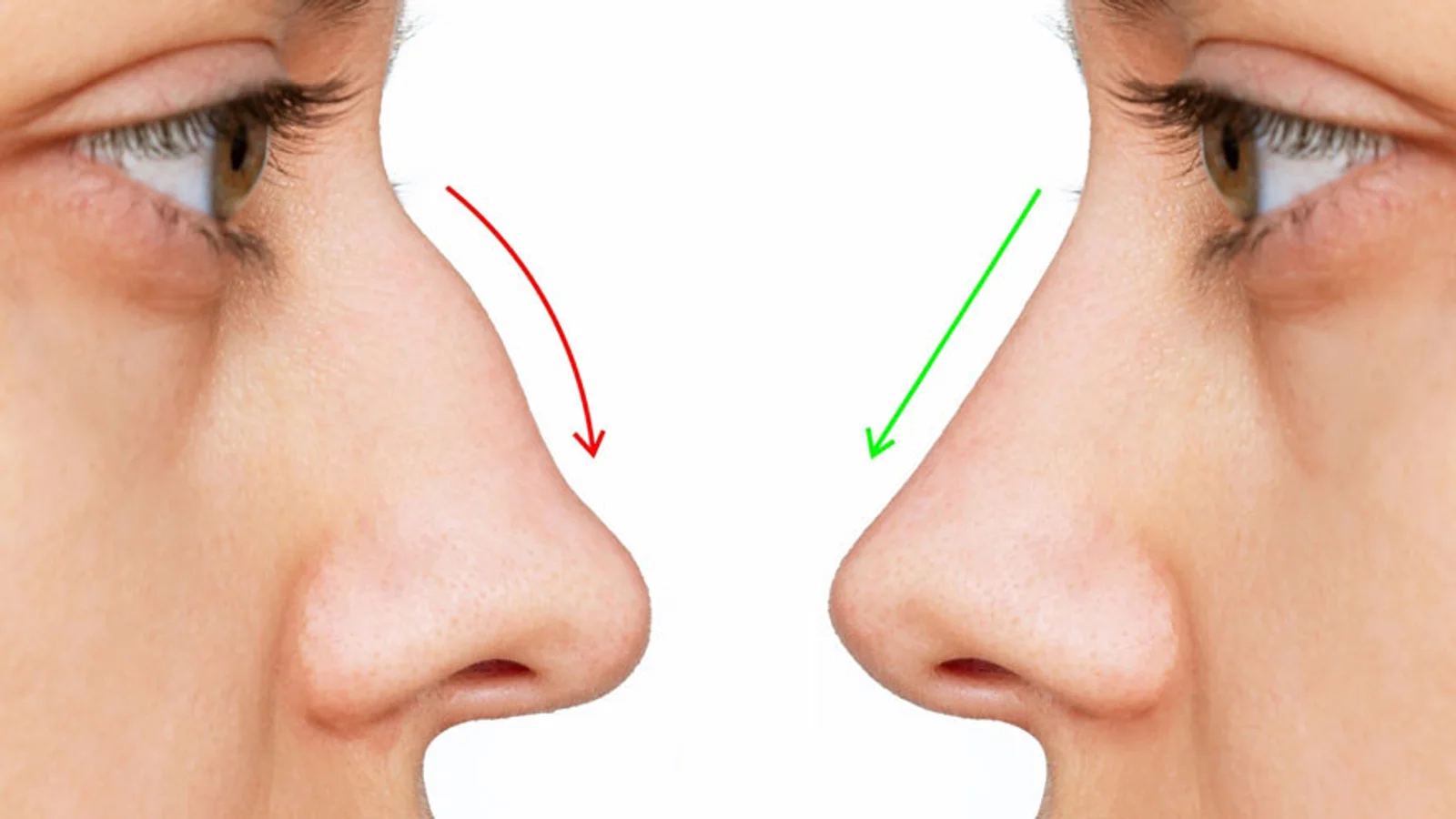
A dorsal hump is not a single piece of bone or cartilage but rather a combined elevation of both. The upper portion of the nose is made of bone, while the middle portion is cartilage. A hump usually forms where these two regions meet.
Bony dorsum (upper third of the nose) — where the nasal bones project outward.
Cartilaginous dorsum (middle third) — formed by the upper lateral cartilages that connect to the septum.
Causes of a Hump Nose
Genetics — The most common reason. Many patients inherit a pronounced nasal bridge from one parent or notice the profile runs in their family.
Ethnic characteristics — Certain backgrounds naturally have stronger, higher bridges. For instance, Middle Eastern, Mediterranean, and some Central Asian profiles often include prominent humps.
Trauma or injury — A childhood fall, a sports injury, or even a minor accident can create asymmetry in the nasal bones, leaving a hump.
Developmental growth patterns — In some cases, the cartilage and bone grow at slightly different rates during puberty, creating a convex shape.
The key is that a dorsal hump is rarely “just extra bone.” It is a three-dimensional relationship between bone, cartilage, and skin thickness. Safe removal requires reshaping the entire nasal framework, not just filing it down.
Why Patients Seek Hump Nose Correction

Most patients don’t come in using medical terms like “dorsal hump.” Instead, they describe how the bump affects their self-image:
“My nose looks too big in photos.”
“My profile feels harsh or masculine.”
“I just want a smoother, softer line.”
Aesthetic Motivations
For women, smoothing the hump often creates a more delicate or feminine profile. For men, the goal may not be complete removal but subtle refinement—reducing the hump while keeping a strong, defined bridge that looks masculine but balanced.
Cultural Considerations
In Korea, and especially in Gangnam, patients value natural, harmonious changes over dramatic transformations. The nose should look balanced with the eyes, lips, and jawline, not surgically altered. International patients traveling to Seoul often emphasize that they want to keep their ethnic identity while simply refining the hump, which requires both sensitivity and precision.
Psychological Impact
It’s easy to underestimate how much a small bump can affect confidence. Patients often avoid side-profile photos, tilt their head to disguise the bridge, or feel self-conscious in conversation. Correcting the hump can restore balance and allow the patient’s eyes and smile—not their nose—to take center stage.
How Is a Dorsal Hump Removed?
At Arke Clinic, dorsal hump correction is performed through rhinoplasty. The process depends on whether the hump is primarily bone, cartilage, or a mix of both.
1. Precise Surgical Assessment
Every patient begins with a 1:1 consultation and imaging. Using digital simulations, Dr. In-Bae Kim shows what the nose might look like with different degrees of hump reduction. Interestingly, many patients discover that leaving a very slight slope looks more natural than making the bridge completely flat.
This planning stage is crucial because the dorsal hump doesn’t exist in isolation—it must harmonize with the nasal tip, forehead, and chin.
2. Hump Reduction
Cartilage trimming — If the hump is mostly cartilaginous, small amounts are shaved or excised.
Bone reshaping — If bone contributes to the hump, it is carefully rasped or cut with controlled precision.
The goal is conservative reduction. Taking away too much bone or cartilage risks an unnatural, scooped look and can weaken the nasal structure.
3. Closing the “Open Roof”
Once the hump is reduced, the nasal bones may no longer meet at the midline, leaving a flat gap—known as an “open roof deformity.” To fix this, surgeons perform osteotomies (controlled fractures) and gently reposition the bones inward to create a smooth, continuous line.
4. Refinement and Structural Support
Sometimes cartilage grafts are added to reinforce the mid-vault or smooth transitions between the bridge and tip. These grafts may come from the patient’s septum or, in some cases, from the ear. This step ensures that the nose looks balanced not only from the side but also from the front view.
Open vs. Closed Rhinoplasty for Hump Removal
Patients often ask if they can correct a hump through a “scarless” closed rhinoplasty.
Closed rhinoplasty — Incisions are hidden inside the nostrils. This approach works well for small, isolated humps that don’t require much tip or structural modification. Recovery is often quicker.
Open rhinoplasty — A small incision across the columella (between the nostrils) allows the surgeon full visibility. This method is preferred for larger humps, complex cases, or when additional grafting and reshaping are needed.
At Arke Clinic, the method is chosen based on patient anatomy and goals. The priority is achieving precise, safe, and lasting results—not just choosing the “least invasive” option.
Recovery After Dorsal Hump Removal
Healing from hump removal is similar to standard rhinoplasty.
Splinting and support — A nasal splint is worn for 5–7 days to stabilize the bones.
Bruising and swelling — Most patients experience bruising around the eyes and swelling along the bridge, which improves significantly after 2 weeks.
Return to daily life — Patients often return to work or school within 7–10 days.
Refinement phase — While the nose looks presentable within 2–3 weeks, subtle swelling can take several months to settle, with the final profile visible at around 9–12 months.
One factor many patients overlook is skin thickness. Patients with thicker skin may need extra patience, as the skin takes longer to redrape smoothly over the new bridge. For thinner-skinned patients, small irregularities are more visible, which is why precise surgical technique is so important.
Risks and How to Avoid Them
Every surgery carries risks, but with dorsal hump removal the most common include:
Over-reduction — Creating an unnaturally flat or scooped bridge.
Surface irregularities — Small bumps or unevenness if bone edges aren’t smoothed.
Breathing difficulties — If structural support is weakened, the nasal airway can narrow.
Asymmetry — Even subtle unevenness can be noticeable in profile photos.
The best way to avoid these outcomes is by choosing a surgeon who specializes in structural rhinoplasty. At Arke Clinic, Dr. Kim takes a conservative, precision-based approach—removing only what is necessary and reinforcing where needed to ensure both function and aesthetics.
The Korean Approach to Natural Profiles
South Korea, and particularly Seoul’s Gangnam district, is world-renowned for rhinoplasty. Unlike some regions where dramatic changes are common, the Korean approach emphasizes subtle, natural refinement.
Patients here often request that their hump be reduced just enough to soften the profile—not erased completely. The goal is harmony, not perfection. When done well, the change doesn’t make the nose the “center of attention.” Instead, it balances the face so the eyes, lips, and overall expression stand out.
As Dr. Kim often explains: “Surgery should not erase your identity—it should reveal a more balanced version of it.”
Who Is a Good Candidate?
You may be a good candidate for dorsal hump removal if you:
Have a visible bump on your nasal bridge that affects your confidence.
Want a straighter or smoother profile without drastically altering your overall facial identity.
Are in good general health and do not smoke heavily.
Have realistic expectations and are seeking balance, not perfection.
For international patients, Seoul remains one of the safest and most advanced destinations for hump nose correction. The combination of surgical expertise, high medical standards, and a patient-first philosophy makes Gangnam clinics a trusted choice for medical travelers.
Final Thoughts: Safe Transformation, Natural Results
Dorsal hump removal is one of the most common rhinoplasty requests, but also one of the most misunderstood. It isn’t about simply “filing down a bump.” It’s about reshaping and reinforcing the nasal framework while ensuring the result looks natural and functions well.
At Arke Clinic in Gangnam, Dr. In-Bae Kim combines over 17 years of experience with a philosophy rooted in precision and safety. Every nose is treated as unique—because every patient’s face, identity, and goals are unique.
More Medical Articles
Continue reading expert guides on procedure planning, anatomy, and post-operative care.

Lower Blepharoplasty: Minimally Invasive vs. Surgical Eye Outcomes
Lower Blepharoplasty: Minimally Invasive vs. Surgical Eye Outcomes Under-eye aging—characterized by puffiness (pseudo-herniation of fat) and dark circles—is a leading cosmetic concern among Koreans aged 30 to 70.
Learn More

Transconjunctival Blepharoplasty: No-Scar Recovery Benchmarks in Korea
Transconjunctival Blepharoplasty: No-Scar Recovery Benchmarks in Korea As South Korea’s demographic shifts toward a "super-aged" society—with those aged 65 and older projected to exceed 20% of the population by 2025—the demand for periorbital rejuvenation has…
Learn More

Healing the Heart: The Psychological Focus of Korean Revision Eye Surgery
Healing the Heart: The Psychological Focus of Korean Revision Eye Surgery In South Korea, often referred to as the "plastic surgery capital of the world," blepharoplasty (double eyelid surgery) is more than just a cosmetic trend; it is a cultural rite of…
Learn More