1:1 Customized Plastic Surgery & Aesthetic Medicine in Gangnam, Seoul — Led by Dr. In-Bae Kim
★ 5.0 Verified Patient Rating
en-US

Clinical Guide & Insights
CO2 Laser Seoul Korea | Arke Clinic Gangnam
Advanced CO2 laser skin resurfacing in Seoul at Arke Clinic. Natural results, minimal downtime. Learn about CO2 laser treatment for aging skin.
Schedule a ConsultationIntroduction
Your skin tells a story. But after 45, 50, or 55 years, you might not like the plot anymore. Fine lines etched around your eyes, deep wrinkles across your forehead, age spots scattered across your cheeks, loss of elasticity, and uneven texture have accumulated in layers that no serum or microdermabrasion can fully address. If you're a discerning professional who has invested decades in skincare but reached the limit of what topical treatments can achieve, you've likely heard about CO2 laser skin resurfacing in Seoul, Korea and wondered if it's genuinely the game-changer that patients claim.
The challenge is real. Most American dermatologists and aestheticians offer only diluted laser options: non-ablative fractional lasers that deliver modest results with minimal downtime, or they recommend invasive surgery when what you really need is something in between. Meanwhile, Korean clinics have perfected CO2 laser resurfacing to a level of precision that American patients struggle to find domestically. You want to understand not just what CO2 laser does, but how it compares to other options, what the real recovery looks like, and whether combining it with other procedures like a facelift makes sense for your specific skin.
By the end of this guide, you'll understand the complete science of CO2 laser skin resurfacing, including how it differs fundamentally from non-ablative and other laser treatments. This is the foundational question that brings most patients to this research. You'll see exactly what your recovery will look like week by week, with honest expectations about downtime and when you can return to your professional life. You'll learn how and why combining CO2 laser with facelift surgery at Arke Clinic amplifies results for mature skin, and you'll have clear guidance on whether this treatment aligns with your timeline and aesthetic goals. Finally, you'll understand the total investment, not just surgery costs, but the complete financial picture of treatment in Seoul.
As a board-certified plastic surgeon with 15 years specializing in facial rejuvenation and 200 or more annual surgical procedures, Dr. In Bae Kim at Arke Clinic has integrated advanced CO2 laser technology into a comprehensive approach to aging skin. One that respects anatomy, prioritizes natural results, and combines procedures strategically for maximum impact. Dr. Kim's extensive training in Korean aesthetic medicine, combined with expertise in treating international patients seeking refined, sophisticated outcomes, positions him to guide patients like you through this decision with both clinical precision and genuine understanding of your concerns.
What Is CO2 Laser Skin Resurfacing and How Does It Work?
Understanding CO2 Laser Technology
CO2 laser skin resurfacing represents the gold standard in advanced, non-invasive skin rejuvenation available to American patients seeking transformative treatment options in Seoul, Korea. But what exactly is happening when you undergo this procedure?
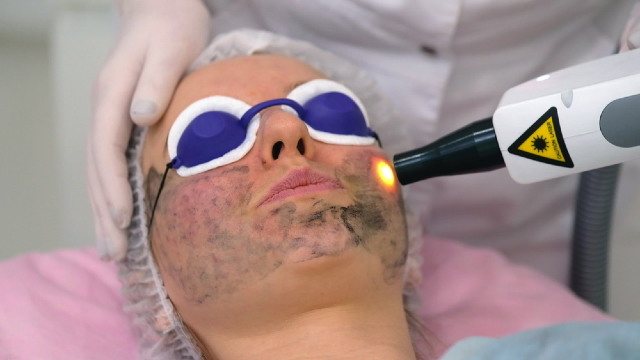
CO2 laser is an ablative laser, meaning it removes the outer layers of skin in a controlled manner. Specifically, it ablates the epidermis and portions of the dermis. The laser emits infrared light at a wavelength of 10,600 nanometers, which is highly absorbed by water in skin cells. This absorption causes instantaneous vaporization of damaged tissue. Unlike non-ablative lasers that heat the skin without removing it, ablative CO2 laser actually removes the problem layer of skin entirely.
Modern fractional CO2 lasers don't treat the entire face uniformly. Instead, they treat only a fraction of the skin surface in a precise grid pattern, leaving untreated skin between the treated columns. This untreated skin serves a critical purpose: it accelerates healing. These untreated zones contain intact skin cells that migrate into the treated areas, speeding recovery compared to older full-field CO2 lasers that treated the entire surface at once. The treated areas are called microthermal zones, and they're typically spaced about 500 micrometers apart.
The reason ablative CO2 laser works so effectively is that it triggers the body's most powerful healing response. By removing damaged skin entirely, the laser stimulates collagen remodeling at a deeper level than non-invasive options can achieve. When you injure skin this way intentionally, your body doesn't just patch the damage. It rebuilds. New collagen is synthesized, reorganized, and strengthened over months. This isn't a surface-level improvement. It's regeneration at the cellular level.
The collagen response is where the transformation actually happens. Immediately after treatment, your skin looks red and swollen. Over the first week, peeling occurs as the damaged outer layers shed. But between weeks two and twelve, something remarkable happens underneath. Fibroblasts in the dermis activate and begin producing new collagen. This collagen continues to remodel and strengthen for up to twelve months after treatment. This is why patients see 50 percent of their final results at three months, 80 percent at six months, and complete results by twelve months.
What Does CO2 Laser Treat? The Complete List
CO2 laser skin resurfacing addresses multiple concerns simultaneously because they all stem from the same root problem: damaged, aged skin that has lost elasticity and accumulated photodamage.
Fine lines and wrinkles represent the primary concern for most patients. The lines around your eyes, forehead, nasolabial folds, and lips respond dramatically to CO2 laser because the laser removes the damaged skin where wrinkles form. As new skin regenerates, wrinkles soften significantly. Deep wrinkles and age-related skin changes also improve, though understanding that deeper wrinkles may not disappear entirely but become substantially less visible matters.
Age spots and sun damage are eliminated or significantly reduced because CO2 laser removes the melanin-rich damaged cells where spots form. Uneven pigmentation and rough texture improve for the same reason. The laser essentially removes the damaged outer layer and allows healthy new skin to emerge.
Rough texture and loss of elasticity are among the most satisfying improvements patients report. Your skin becomes smoother and feels noticeably more supple as new collagen rebuilds the structural foundation. Skin laxity and sagging, when combined with facelift surgery, are addressed by the combination effect: surgery lifts structure, and CO2 laser restores surface quality.
As a secondary benefit, acne scars and other depressed scars improve because the laser removes the scarred tissue border and stimulates collagen fill-in. Uneven skin tone and melasma improve in appropriate cases, though darker skin requires more careful treatment planning.
"CO2 laser works because it's not just a surface treatment. It removes damaged skin entirely and triggers your body's own collagen production," says Dr. In Bae Kim. "For patients over 45 with significant sun damage and loss of elasticity, it delivers results that are simply not possible with topical treatments or non-ablative alternatives. The key is planning the treatment around your skin's specific needs and staging it with other procedures if necessary."
CO2 Laser vs Other Laser Treatments: Understanding Your Options
CO2 (Ablative) vs Non-Ablative Laser: The Key Differences
This is the question that brings most patients to their research: what's the actual difference between CO2 laser and the non-ablative options their dermatologist mentioned?
CO2 laser (ablative) removes outer skin layers, delivering strong results but requiring longer recovery of seven to fourteen days of visible downtime. Non-ablative lasers, which include fractional erbium and IPL systems, heat the skin without removing it. They're gentler, with minimal downtime of one to two days, but results are modest. This isn't a matter of preference or marketing. It's fundamental physics.
When you ablate skin, you trigger an intense healing response. Your body sees the injury and responds with maximum effort: new collagen, reorganized structure, rebuilt elasticity. Visible transformation results from this aggressive healing. Non-ablative lasers heat the dermis but leave the epidermis intact, so the healing response is gentler and results are incremental. Think of it this way: ablative is demolition and rebuild. Non-ablative is renovation without demolition.
The differences matter for your situation specifically. If you're 45 to 55 with decades of sun exposure and significant visible aging, non-ablative treatments often feel like treating symptoms rather than the root problem. You'd need five to eight sessions spread over six to eight months to see results that CO2 laser delivers in one treatment with one concentrated recovery period.
The healing timeline illustrates why this matters. CO2 laser delivers 80 percent of final results within three months and complete results by six to twelve months. Non-ablative requires six to eight sessions with a three to six month total timeline for comparable results. Then there's the cost reality: CO2 laser is a one-time significant investment, but non-ablative might be cheaper per session until you calculate total cost. Five to eight sessions at $600 to $800 each equals $3,000 to $6,400 plus the time and inconvenience of multiple appointments, and still delivers less dramatic results than CO2.
Here's the detailed comparison:
Aspect | CO2 (Ablative) | Non-Ablative Laser | IPL |
|---|---|---|---|
Depth of Treatment | Removes epidermis and dermis | Heats dermis only | Surface and shallow depth |
Downtime | 7 to 14 days visible | 1 to 3 days minimal | 0 to 2 days |
Results Timeline | 80 percent at 3 months; 100 percent at 6 to 12 months | Gradual over 6 to 8 sessions | Gradual over 4 to 6 sessions |
Best For | Deep wrinkles, significant damage, texture issues | Fine lines, mild sun damage, maintenance | Sun damage, age spots, redness |
Number of Treatments | Typically 1 (occasional touch-up after 2+ years) | 5 to 8 sessions recommended | 4 to 6 sessions recommended |
Total Cost Typically | $3,000 to $8,000 (one time) | $3,500 to $6,000+ (multiple sessions) | $2,000 to $4,000+ (multiple) |
Collagen Stimulation | Intense (major remodeling over 6 to 12 months) | Moderate (gradual improvement) | Mild to moderate |
Why CO2 Is the Gold Standard for Mature Skin at Arke Clinic
CO2 laser is the only treatment that truly addresses the degree of photodamage and skin laxity that accumulates by age 45 and beyond. It's not that non-ablative treatments don't work. They do. But they work for different problems: fine lines, mild sun damage, maintenance between major treatments. For the significant aging that brings most patients to research Seoul clinics, CO2 is the gold standard.
The results are measurable and dramatic. Patients see themselves visibly transformed, not gradually improved over months of sessions. When combined with surgical procedures like facelift or blepharoplasty at Arke Clinic, CO2 laser amplifies outcomes in ways that neither procedure alone can achieve.
For a discerning patient like you, who has already invested in skincare for decades, CO2 laser represents a decisive step, not a tentative experiment. You're not hoping for modest improvement. You're committing to transformation. The recovery is real and concentrated into one to two weeks rather than spread over months of treatments and gradual change.
"When a patient comes to me at 48 or 52 having done everything right for 25 years, great skincare, sun protection, even some Botox, but still sees deep wrinkles, age spots, and loss of elasticity, CO2 laser is often the answer they've been looking for," Dr. Kim explains. "Non-ablative options feel like treating symptoms. CO2 treats the root problem: damaged skin that needs to be replaced with new, healthy skin. Yes, the recovery is meaningful, but for someone willing to take ten days and invest in their appearance, the transformation is unmatched."
The CO2 Laser Treatment Process at Arke Clinic
Pre-Treatment Consultation and Customization
Before your CO2 laser treatment even begins, the real work starts. Not all skin needs the same intensity of treatment. Not all aging manifests identically. This is where personalized medicine begins.
Dr. Kim performs a virtual or in-person assessment that evaluates your skin type, damage pattern, and specific concerns. Fair skin, deeper skin tones, and medium skin types all respond to CO2 laser, but they require different approach strategies. The depth of sun damage varies. Some patients have significant wrinkles but minimal pigmentation issues. Others have extensive age spots but relatively preserved skin texture. The treatment plan must account for these differences.
This personalized treatment plan is anatomy-based. Dr. Kim considers the thickness of skin at different facial zones. The eyelid skin is delicate and thin; the forehead is thicker and more resilient. Wrinkles around the mouth are treated differently than forehead wrinkles because the skin behaves differently and the healing priorities differ. This isn't generic laser treatment. It's customized to your individual face.
Detailed before photography and expectations setting happen during consultation. You see realistic outcome discussion. Dr. Kim shows you before and after examples of patients similar to your age and skin type. He explains what's realistically possible and what remains unchanged. A facelift can't eliminate all wrinkles, and neither can CO2 laser. But the combination of what's possible creates transformation.
Skin preparation protocol begins one to two weeks before treatment. You're advised to avoid sun exposure, discontinue certain products, and potentially pause medications that increase bleeding like aspirin. This preparation ensures optimal healing and minimizes complications.
Anesthesia discussion covers your options. Local anesthesia is applied for comfort. Some patients choose light sedation for additional comfort, especially if treating large areas. The choice is yours based on preference and anxiety level.
During the Treatment
The laser treatment itself typically takes 30 to 45 minutes depending on the treatment area. Full face treatment takes longer than zone-specific treatment.
Upon arrival, local anesthesia is applied to numb the treatment area. The numbness develops over 10 to 15 minutes, ensuring complete comfort during treatment. Some patients choose light sedation in addition to local anesthesia. This is perfectly safe and allows deep relaxation during the procedure.
As Dr. Kim applies the fractional CO2 laser, you hear a distinctive sound and feel heat, but the anesthesia prevents pain. The laser creates a systematic grid pattern across treatment areas. You may hear clicking or a pulsing sound as the laser fires. This is normal and indicates the laser is functioning properly.
Real-time adjustment happens throughout the treatment. Dr. Kim monitors skin response and adjusts laser settings based on how your skin reacts. The depth of treatment is customized by zone. Eyes are treated with lower intensity than the forehead because the skin is thinner and more delicate. This zone-specific customization is what separates skillful CO2 laser treatment from generic approaches.
The sensation is warm and slightly tingly, but never painful due to anesthesia. Some patients describe it as intense but manageable. The procedure is over before anxiety builds.
Immediately after treatment, Dr. Kim applies specialized aftercare cream and protective barriers to the treated skin. These products support healing and reduce inflammation. Ice is applied to reduce immediate swelling and provide comfort. Most patients feel relief and comfort after treatment rather than pain.
"What I tell patients is that CO2 laser is precise, not random," Dr. Kim says. "I'm not just blasting the whole face. I'm treating specific zones with specific intensity based on your individual anatomy and damage pattern. The fractional approach means I'm creating thousands of tiny columns of new skin, while the surrounding untreated skin accelerates healing. That's why the results are so natural and dramatic."
Immediate Recovery (First 24 Hours)
The first 24 hours set expectations for the weeks ahead. Your face will look different. This is not subtle. This is obvious change.
Significant redness and swelling develop immediately after treatment. Your face may look puffy and red, similar to a moderate sunburn but more pronounced. Possible mild oozing or weeping from treated areas is completely normal. This is your skin beginning to shed damaged layers and initiate healing.
Pain is generally mild and managed with provided pain medication and ice. Most patients describe discomfort rather than pain. Ibuprofen or prescribed pain medication handles this adequately. Ice application every 20 minutes provides comfort and reduces swelling.
Some clinics use occlusive dressings that cover treated skin to create an optimal healing environment. Arke Clinic's approach varies by patient and treatment extent. Dr. Kim discusses this during your consultation based on your specific situation.
Rest, no heavy activity, and keeping your head elevated help manage swelling. Sleeping on two or three pillows helps fluid drain from your face rather than accumulate. Your goal is to support your body's healing process, not fight it.
Medication support includes antibiotics to prevent infection, anti-inflammatory support to manage swelling, and pain relief as needed. Dr. Kim provides detailed instructions about which medications to take and when.
CO2 Laser Recovery Timeline: What Your Face Will Actually Look Like
Days 1 to 3: The Acute Phase
This is the hardest part psychologically because the change is dramatic and obvious. But it's also the shortest phase. Three days of intensive healing.
On Day 1, significant redness develops across treated areas. Swelling peaks on this day and the next. Your face may look puffy and unrecognizable to yourself. This is alarming the first time, but completely expected and temporary. Weeping or oozing from treated areas is normal. Your skin is shedding damaged layers and beginning the healing cascade.
Days 2 and 3 bring intensifying redness as your body activates the inflammatory healing response. Swelling peaks around day two to three. You look like you have a moderate to severe sunburn, but more swollen. Crusting may begin as the outer layer starts to separate. The appearance is noticeably raw and obviously treated.
You'll look nothing like yourself. This is not the time for video calls, professional meetings, or social interaction. Plan to be completely off work. If your job requires professional appearance or video presence, you need to take these three days off. No question.
Rest is essential. Keep your head elevated using multiple pillows. Ice application every 20 minutes reduces swelling and provides comfort. Avoid water on your face except for gentle prescribed cleansing. Use only the skincare products provided by Dr. Kim. Your skin is injured and vulnerable. Nothing extra.
Days 4 to 7: The Peeling Phase
The peeling phase is when transformation becomes visually obvious because you're shedding the damaged outer layers.
Days 4 to 7 show significant change. Redness remains but swelling begins to decrease noticeably. Flaking and peeling accelerate. Your skin looks like it's been in the sun for a week without sunscreen, then the outer layer is peeling off. Multiple layers of skin shed over these days. The appearance is obviously treated and compromised.
This is still not appropriate for client meetings or professional visibility. You look visibly different from your normal appearance. Makeup cannot cover this stage effectively. If you must return to work, only do so if your role is completely remote and you're not on camera. Even then, some patients prefer staying home to avoid self-consciousness.
At-home care continues with gentle cleansing using prescribed products only. No regular cleansers, no exfoliants, no active ingredients. Prescribed moisturizer and strict sunscreen (SPF 50 or higher) protect the new, delicate skin emerging underneath. Sun exposure during this phase causes permanent pigmentation damage, so sunscreen is non-negotiable.
Pain and discomfort are minimal to moderate at this stage. Mostly itching as the skin heals, which creates an urge to scratch that you must resist. Scratching disrupts healing and increases infection risk. Keep your hands away from your face.
By day seven, some patients can return to remote work or low-visibility office roles with advanced makeup. Most still prefer staying home to avoid the awkwardness of looking visibly treated. A pro tip: if you have a major presentation, client meeting, or important professional event scheduled, do not plan CO2 laser the week before. Give yourself two to three weeks minimum.
Weeks 2 to 4: The Healing Phase
Week 2 represents a turning point. You move from acute healing to gradual improvement. Most active peeling completes. Redness persists but becomes less severe. New pink skin emerges underneath. The appearance is still obviously treated, but moving toward normal.
Weeks 3 and 4 bring continued improvement. Redness gradually fades. New skin is still sensitive and may appear slightly pink, but makeup provides coverage. By week 3 to 4, with makeup, you can return to work and social interaction, though your skin still has an obvious treated appearance to anyone who looks closely.
Return to work happens around week 2 to 3 for remote work with makeup and week 3 to 4 for in-person professional interaction. The decision depends on your specific job requirements and comfort level. If you're in client-facing roles, most patients prefer waiting until week 3 to 4.
Skincare continues as gentle routine. Strict sunscreen (SPF 50 or higher) is essential. Avoid exfoliants and active ingredients like retinol or acids. Your skin is rebuilding. You support this process by being gentle, not aggressive.
What's happening underneath is invisible but transformative. Collagen remodeling has begun. New collagen is being synthesized in the dermis. This is where the magic starts, though final results aren't yet visible.
Weeks 4 to 12: The Transformation Phase (Months 2 to 3)
Month 2 to 3 is when you start seeing the results you committed to. Redness fades significantly. Skin texture improves visibly. Fine lines soften. The skin has a luminous, refreshed quality that catches people's attention.
What you'll look like at this stage is like yourself, but noticeably brighter, smoother, more refined. People comment that you look great but can't identify what changed. That's the goal: transformation that looks natural because it is natural.
Activity resumes fully. You can return to normal exercise, most skincare routines, and social activities without concern. Your skin has healed enough for normal life.
This is when patients start seeing the results that justified the recovery commitment. Wrinkles have softened measurably. Texture has transformed. Overall radiance is evident. You look refreshed and rejuvenated without looking operated on.
Months 3 to 12: The Complete Transformation (Ongoing Collagen Remodeling)
Final results emerge gradually between months 3 and 6 and continue to improve through month 12. This extended timeline surprises many patients, but it's the biological reality of collagen remodeling.
Collagen remodeling is a biological process, not a chemical reaction that happens overnight. New collagen continues to form and strengthen for up to one year after treatment. At month 12, your skin has completely rebuilt its collagen structure.
Maximum softening of wrinkles, improved elasticity, and refined texture emerge over this extended period. Significant overall facial rejuvenation is evident by month 6, with continued subtle improvement through month 12.
Maintenance involves strict sunscreen going forward. The damage you've reversed through CO2 laser can recur with sun exposure. Continued skincare investment protects your results. Optional gentle laser touch-up treatments can be performed two to three years later if desired, though many patients find their results so durable they never need touch-ups.
CO2 Laser Results and Expectations: What's Realistically Possible
Realistic Outcomes for CO2 Laser at Different Ages and Skin Conditions
Results vary based on starting point. Someone at age 40 to 50 with moderate sun damage sees significant softening of fine lines and improved texture. Wrinkles don't disappear, but soften noticeably. The rejuvenated appearance doesn't look dramatically different, but you look fresher and more refined.
Someone at age 50 or older with significant photodamage experiences transformation-level results. Deep wrinkles soften visibly. Age spots are eliminated or significantly reduced. Overall facial rejuvenation is dramatic. You look considerably younger and more vital.
Skin type variations require consideration. Fair skin responds dramatically to CO2 laser because the contrast between healthy new skin and aged damaged skin is visually striking. Darker skin types require more careful treatment planning and different laser settings, but Arke Clinic has extensive experience with skin tone variation. The results are equally satisfying, just require more precision.
When combined with facelift, CO2 laser amplifies results. The facelift lifts structure and tightens skin. The CO2 laser resurfaces the surface and stimulates collagen. The combination addresses multiple aging mechanisms simultaneously. Results are exponentially better than either procedure alone.
Realistic timelines matter. Patients see 50 percent of results at three months, 80 percent at six months, and final results at twelve months. Managing expectations about this extended timeline prevents frustration. You're not waiting for results. You're watching gradual, consistent improvement month after month.
Maintenance involves understanding that results last five to ten or more years depending on sun exposure and genetics. Some patients choose gentle laser touch-up or maintenance treatments every two to three years. Others find results so durable they never need touch-ups. Both approaches are valid.
CO2 Laser Before and After Gallery
Results speak louder than explanations. Visual evidence of what's possible at your age with your skin type matters.
The gallery displays high-resolution before and after photos of patients in your demographic: women 45 to 60, professional appearance, significant sun damage or wrinkles at baseline. Diverse skin tones are represented. Photos show different treatment focuses: full face, zones, combination with other procedures.
Captions describe each patient's primary concern at baseline (wrinkles, sun damage, texture) and timeline post-treatment (three months, six months, twelve months). This helps you identify patients similar to yourself and envision what might be possible for you.
Filters allow you to view results by age group, primary concern, treatment type, and months post-treatment. This customized approach to before and afters is more helpful than generic gallery scrolling.
"The goal of CO2 laser at Arke Clinic is never to transform you into someone else. It's to reveal the best version of yourself," Dr. Kim explains. "At 48, 52, 56, you've earned the right to look as vital and refined as you feel internally. CO2 laser removes the damage that time and sun have accumulated, restores elasticity and radiance, and gives you back the skin that matches your energy and confidence. The results look natural because they are natural. They're your skin, healed and renewed."
Combining CO2 Laser with Facelift Surgery: Strategic Planning for Maximum Results
The Case for Combination (Same Surgery)
The decision to combine or stage CO2 laser and facelift surgery is strategic. There are legitimate arguments for both approaches.
Combining them in the same surgical session is powerful. Facelift addresses structural aging: lifting jowls, tightening the neck, restoring definition. CO2 laser addresses surface aging: wrinkles, texture, tone, radiance. Combined, you're addressing all aging mechanisms simultaneously.
The benefits are significant. One recovery period instead of two. One time away from New York instead of two. Maximum amplification of results because fresh lifted skin is more responsive to collagen remodeling. The synergy between procedures is real.
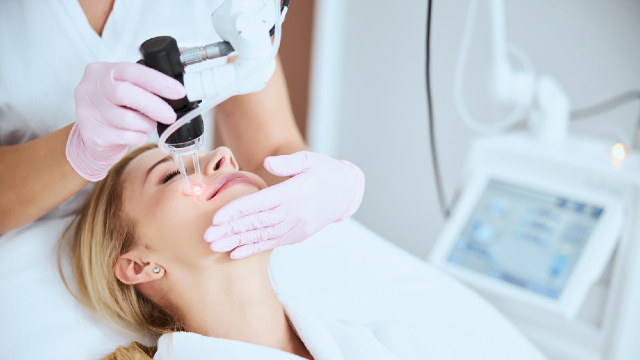
Timing during combination approach places CO2 laser at the end of facelift surgery, after Dr. Kim has lifted and tightened the deeper structures. This allows the deeper tissues to stabilize before resurfacing begins. Both procedures happen under the same anesthesia, which is efficient and safe.
Recovery is slightly longer than facelift alone. Seven to ten days of visible downtime instead of five to seven days. But this represents one recovery period, not two extended recoveries months apart.
The Case for Staging (Separate Timing)
Staging procedures means facelift first, then CO2 laser six to twelve months later, after facelift healing is complete. This approach makes sense in specific situations.
If you prefer less aggressive recovery in a single session, staging is gentler. One procedure is less intense than two. The first recovery is more manageable, and you're not committing to maximum intensity all at once.
If you want to assess facelift results before adding laser, staging allows evaluation. You see how the lift alone transforms your face, then decide whether adding resurfacing enhances results further. Some patients find facelift results so satisfying they choose not to pursue additional laser treatment.
Some surgeons recommend staging to allow facelift healing to complete before adding resurfacing. Healing priorities are different for each procedure, and some surgeons prefer not to compound them simultaneously.
Arke Clinic's Recommendation
Dr. Kim typically recommends combination approach for most mature patients seeking comprehensive rejuvenation. The amplification effect is significant. One recovery period is more practical for busy professionals managing work obligations.
The exception is patients with milder skin damage who might benefit from facelift alone or prefer to evaluate each procedure separately. Customization is based on your specific anatomy, damage pattern, and personal preference. The decision is made during consultation with full discussion of pros and cons.
"For a patient like you, someone who has taken excellent care of themselves and wants comprehensive facial rejuvenation, combining facelift and CO2 laser is powerful," Dr. Kim says. "You're addressing the structural aging through facelift and the superficial damage through laser in one strategic session. You recover once, and the results are exponentially better than either procedure alone. That said, it's your decision. We'll discuss what's right for your specific situation during your consultation."
Why Choose Arke Clinic for CO2 Laser Skin Resurfacing
Dr. In Bae Kim's Expertise in CO2 Laser and Facial Rejuvenation
Dr. In Bae Kim brings 15 or more years of specialized experience in facial rejuvenation and non-surgical skin treatments. His extensive training in advanced fractional CO2 technology is grounded in thousands of treatments performed over his career.
Board certification in plastic surgery provides foundational credibility, but the specialization matters more. Dr. Kim performs 200 or more advanced surgical procedures annually, which means he's doing complex facial work constantly. This volume builds skill and experience that generic plastic surgeons don't develop.
His international approach reflects understanding of Western aesthetic preferences for natural results. He's trained patients from around the world and understands that American patients want refinement, not dramatic transformation. Korean aesthetic medicine emphasizes natural beauty over obvious surgery, and Dr. Kim embodies this philosophy.
Ongoing education is part of Dr. Kim's commitment. He participates in international aesthetic medicine conferences and continuously advances his knowledge of laser and surgical techniques. The field evolves, and so does his practice.
His treatment philosophy is personalized and anatomy-based. Every patient's skin is unique, requiring customized treatment planning rather than applying a one-size-fits-all protocol. This attention to individual variation explains why results at Arke Clinic look natural and tailored rather than generic.
Arke Clinic's Advanced Technology and Facility Standards
Arke Clinic uses state-of-the-art fractional CO2 laser technology. Equipment is regularly maintained and calibrated to ensure optimal performance. The technology is current and advanced, not outdated systems.
The facility is internationally accredited and meets Korean plastic surgery board standards. This means independent verification that the clinic maintains appropriate safety, hygiene, and quality standards. The facility location in Gangnam, Seoul is the epicenter of cosmetic medicine innovation, where the highest standards are expected and met.
Professional aftercare protocols are specifically designed for international patients. This isn't a generic protocol. It's customized for patients traveling from the United States who have specific recovery needs and constraints.
An English-speaking medical coordinator is available throughout your stay, removing language barriers and ensuring clear communication. Virtual follow-up support for patients returning to the USA maintains connection and addresses questions from home.
International Patient Support for New York Professionals
Virtual consultation is available before travel, allowing you to meet Dr. Kim and discuss your goals before committing to travel.
English-language communication at every stage ensures nothing gets lost in translation. Medical information is too important for communication errors.
Support for flight arrangements and accommodation in Gangnam removes logistical stress. You focus on treatment and recovery, not travel coordination.
Post-treatment remote check-ins and virtual consultations maintain care continuity after you return to New York. Dr. Kim reviews your progress and provides guidance for recovery at home.
Coordination with your US-based physician is available if needed. Some patients like their local dermatologist involved in follow-up care, and Arke Clinic supports this collaboration.
Twenty-four-hour availability during your Seoul recovery stay means support is available when you need it, regardless of time zone differences. You're not managing recovery alone.
Detailed aftercare protocol is customized for managing recovery at home in New York, with specific guidance about activities, skincare, sun protection, and when to contact the clinic with concerns.
CO2 Laser Cost and Investment at Arke Clinic
CO2 Laser Cost Breakdown
Pricing transparency removes uncertainty from your decision-making process. Here's what CO2 laser treatment costs at Arke Clinic.
Full-face CO2 laser treatment ranges from 4,500 to 6,500 US dollars depending on intensity and customization. Zone-specific treatment (forehead, periocular, lower face) ranges from 2,500 to 4,000 dollars per zone. Combination with facelift ranges from 12,000 to 18,000 dollars for both procedures combined, which is significantly less than the cost of both procedures performed separately.
What's included in pricing is critical to understand. Surgeon fee, anesthesia, facility use, and immediate post-treatment care are included. Detailed aftercare protocol and follow-up support are included. No hidden fees, no surprise charges for facility, no separate anesthesia costs added later.
Pricing transparency is commitment. You receive itemized breakdown during consultation. All costs are disclosed upfront.
Procedure | Cost Range | What's Included |
|---|---|---|
Full-face CO2 laser only | $4,500 to $6,500 | Surgeon, anesthesia, laser, aftercare |
Zone-specific CO2 laser | $2,500 to $4,000 per zone | Surgeon, anesthesia, laser, aftercare |
CO2 laser and SMAS facelift | $12,000 to $18,000 | Both procedures, anesthesia, full aftercare |
CO2 laser and blepharoplasty | $8,000 to $11,000 | Both procedures, anesthesia, aftercare |
The Total Investment: Beyond Surgery
The complete financial picture includes more than the surgical fee. Realistic framing helps you understand the genuine investment required.
Flights from New York to Seoul on business class, which most patients prefer, typically cost 1,200 to 2,500 US dollars for round-trip tickets. Accommodation in Gangnam for 10 to 14 days costs 1,000 to 2,000 dollars depending on preference for luxury versus practical comfort. Pre-treatment and post-treatment skincare products cost 300 to 500 dollars.
Total all-in investment for CO2 laser treatment trip is 8,500 to 12,000 dollars. For comprehensive CO2 laser combined with facelift, total investment is 20,000 to 25,000 dollars all-in. This is significant but justified for comprehensive facial rejuvenation that delivers results lasting five to ten or more years.
How to Book Your CO2 Laser Consultation at Arke Clinic
Step 1: Schedule Your Virtual Consultation
Virtual consultation is available for US patients, removing the need to travel before making your decision.
During consultation, you'll discuss your skin concerns, aesthetic goals, medical history, and treatment recommendations. This is a detailed conversation, not a sales pitch. Dr. Kim listens to your specific situation and recommendations are customized.
Booking is simple. Click the consultation link on Arke Clinic's website, call the clinic directly, or WhatsApp for immediate response. Consultation is typically scheduled within 3 to 5 business days.
The consultation lasts 30 to 45 minutes as a video call with Dr. Kim or senior consultant. No pressure, no obligation. You're evaluating whether this is right for you, and Arke Clinic is evaluating whether they can deliver the results you want.
Step 2: Treatment Planning and Customization
After consultation, you'll receive detailed customized treatment plan. This includes before photos for comparison and realistic timeline for results.
Final cost quote is itemized and transparent. You see exactly what you're paying for and why.
Information on scheduling dates allows you to plan your travel and work absence. Pre-treatment protocol begins, with detailed instructions about preparation.
Coordination of travel assistance includes help with flight bookings and accommodation in Gangnam if desired. This removes logistical stress from your decision.
Step 3: Pre-Treatment and Recovery Support
Pre-treatment protocol is followed carefully. Preparation optimizes results and minimizes complications.
During treatment, Dr. Kim provides personalized attention and customization based on your specific skin.
Post-treatment care is managed with detailed protocols and remote support. You're not managing recovery alone.
Schedule an Online Consultation
WhatsApp: Click here
Schedule an Online Consultation
Website: /
Location: Gangnam-gu, Seoul, South Korea
Clinic Hours
Our clinic operates Monday to Friday from 9:30 AM to 7:00 PM, offering extended hours for your convenience. On Saturdays, we are open from 9:30 AM to 3:00 PM, and the clinic is closed on Sundays.
Frequently Asked Questions
Q: What Is the Difference Between CO2 Laser and Other Laser Treatments?
A. CO2 laser is ablative, removing skin layers entirely and triggering intense collagen remodeling. Non-ablative lasers heat skin without removal, delivering gentler results with minimal downtime. For mature skin with significant damage, CO2 laser delivers deeper, more dramatic results. Non-ablative treatments are better for mild concerns or patients preferring minimal downtime.
Q: How Long Does CO2 Laser Recovery Take?
A. Visible downtime is 7 to 14 days. You can return to work around day 10 to 14 with makeup coverage. Final results continue to improve for 6 to 12 months as collagen remodels. Most dramatic improvements occur between months 3 to 6.
Q: Will CO2 Laser Make Me Look Overdone or Unnatural?
A. No. CO2 laser removes damaged skin and allows healthy, youthful skin to emerge naturally. Results look natural because they are your own skin, rejuvenated. Dr. Kim's approach prioritizes subtle, refined outcomes that look like you, refreshed.
Q: Can I Combine CO2 Laser with Facelift Surgery?
A. Yes, and combination is often recommended for optimal results. Facelift lifts and tightens structure. CO2 laser resurfaces surface and stimulates collagen. Combined, they address all aging mechanisms. Both procedures are performed in one surgical session.
Q: How Much Does CO2 Laser Cost at Arke Clinic?
A. Full-face CO2 laser ranges from 4,500 to 6,500 US dollars. Zone-specific treatment is 2,500 to 4,000 dollars per zone. Combined with facelift, the cost is 12,000 to 18,000 dollars. All costs are transparent with no hidden fees.
Q: Is It Safe to Have CO2 Laser in South Korea?
A. Yes. Arke Clinic meets international safety standards, and Dr. Kim has 15 or more years of specialized experience. South Korea is world-renowned for advanced cosmetic procedures with world-class emergency medical facilities.
Q: How Soon Can I Fly Back to the USA After CO2 Laser?
A. You can typically fly 10 to 14 days after treatment. By day 10, swelling has subsided significantly and peeling is mostly complete. Your skin will appear slightly pink but stable for travel.
Q: Can I Have CO2 Laser if I've Had Botox or Fillers?
A. Yes, but timing matters. If you have recent filler, Dr. Kim will wait until it settles before treating overlying skin. Botox is fine. Discuss your history during consultation.
Q: What Is the Difference Between Fractional and Full-Field CO2 Laser?
A. Fractional treats grid pattern of skin, leaving untreated areas between columns to accelerate healing. Full-field treats entire surface, requiring longer recovery and offering no healing advantage. Fractional is standard and safer.
Q: How Long Do CO2 Laser Results Last?
A. Results can last 5 to 10 or more years depending on sun exposure and genetics. Many patients choose gentle maintenance treatments or touch-ups after 2 to 3 years.
Conclusion
CO2 laser skin resurfacing at Arke Clinic represents the most advanced, evidence-based approach to addressing the accumulation of sun damage, wrinkles, and loss of elasticity that develop after 45 years of living. Unlike gentler non-ablative options that offer incremental improvement over months, CO2 laser delivers measurable, dramatic rejuvenation by removing damaged skin entirely and triggering your body's own collagen remodeling process. When combined with surgical procedures like facelift or eyelid surgery, CO2 laser amplifies results and addresses multiple aging mechanisms in a single, efficient trip to Seoul.
The investment is significant but justified. You're not paying for a temporary improvement that requires maintenance treatments every few months. You're paying for transformation that lasts years. For a discerning professional who has invested decades in skincare and self-care, CO2 laser represents the next logical step when topical treatments no longer deliver the results you deserve.
Dr. In Bae Kim's 15 or more years of specialized experience in facial rejuvenation and his commitment to personalized, anatomy-based treatment planning ensure that your specific skin concerns are addressed with precision and artistry. At Arke Clinic, you're not receiving a generic, high-volume procedure. You're receiving a customized treatment plan designed for your individual face and your specific goals. The approach respects your intelligence, values your time, and prioritizes results that look natural and refined rather than operated on.
If you're ready to take the next step toward comprehensive facial rejuvenation through CO2 laser skin resurfacing in Seoul, Korea, schedule your complimentary virtual consultation with Dr. Kim today. Contact Arke Clinic at the number provided, email your inquiry, or WhatsApp for immediate response. You'll be connected with a knowledgeable team that understands your concerns, speaks your language, and is committed to delivering the transformative results you've been researching.
Your face tells your story. Make sure it's the story you want to tell.
About the Author
Dr. In Bae Kim is a board-certified plastic surgeon with 15 or more years of specialized experience in facial rejuvenation and advanced laser treatments. As lead surgeon at Arke Clinic Plastic Surgery and Aesthetic in Gangnam, Seoul, Dr. Kim performs 200 or more advanced laser and surgical procedures annually. He is a member of the Korean Society of Plastic and Reconstructive Surgeons and the International Society of Aesthetic Plastic Surgery. His specialized expertise includes anatomy-based treatment planning, personalized CO2 laser resurfacing, SMAS facelift technique, and natural results philosophy. Dr. Kim is dedicated to providing world-class outcomes for international patients seeking refined, sophisticated cosmetic surgery in Seoul.
For consultations or questions:
More Medical Articles
Continue reading expert guides on procedure planning, anatomy, and post-operative care.

Lower Blepharoplasty: Minimally Invasive vs. Surgical Eye Outcomes
Lower Blepharoplasty: Minimally Invasive vs. Surgical Eye Outcomes Under-eye aging—characterized by puffiness (pseudo-herniation of fat) and dark circles—is a leading cosmetic concern among Koreans aged 30 to 70.
Learn More

Transconjunctival Blepharoplasty: No-Scar Recovery Benchmarks in Korea
Transconjunctival Blepharoplasty: No-Scar Recovery Benchmarks in Korea As South Korea’s demographic shifts toward a "super-aged" society—with those aged 65 and older projected to exceed 20% of the population by 2025—the demand for periorbital rejuvenation has…
Learn More

Healing the Heart: The Psychological Focus of Korean Revision Eye Surgery
Healing the Heart: The Psychological Focus of Korean Revision Eye Surgery In South Korea, often referred to as the "plastic surgery capital of the world," blepharoplasty (double eyelid surgery) is more than just a cosmetic trend; it is a cultural rite of…
Learn More